
Rosacea & Facial RednessNewstead, Brisbane
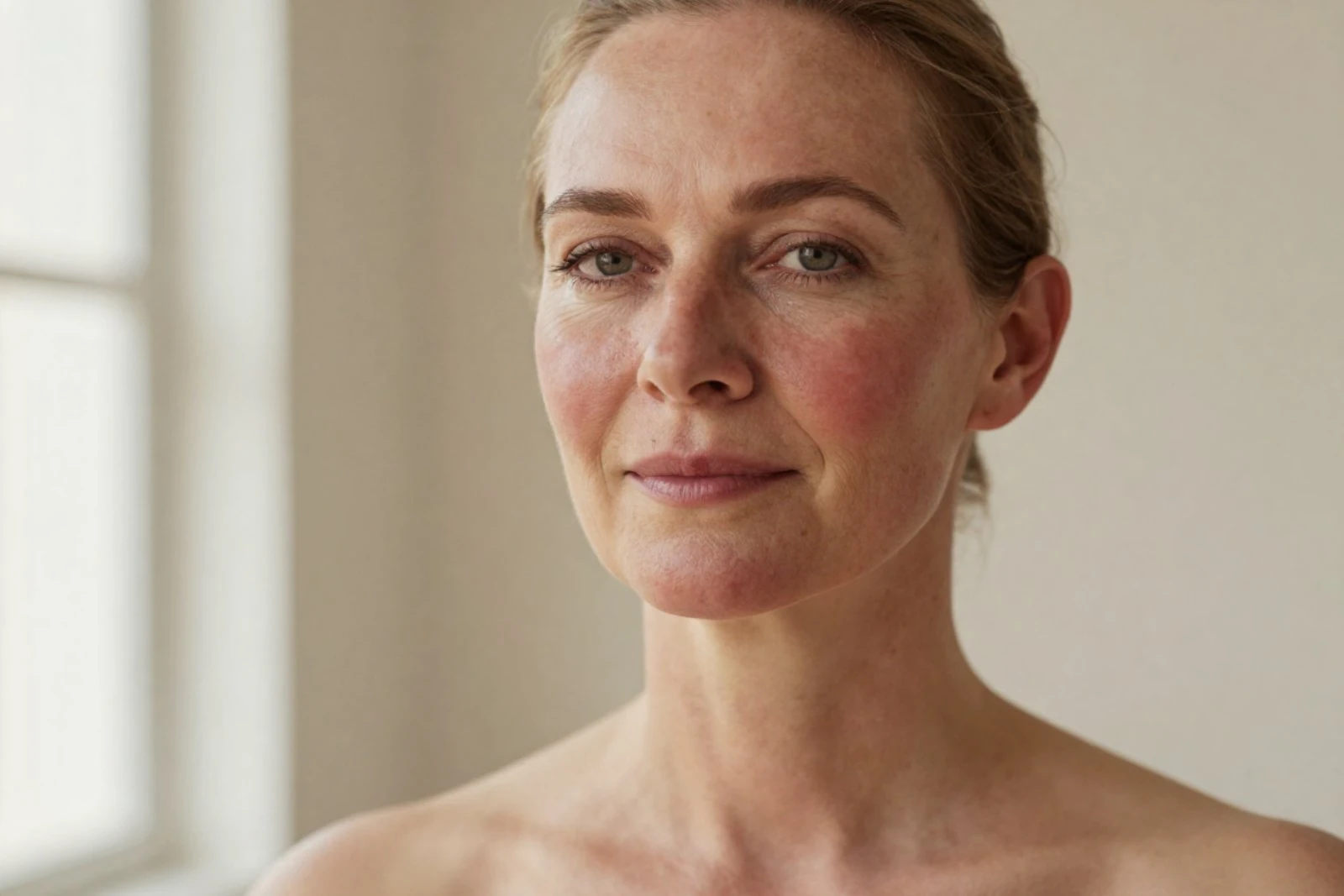
Rosacea is one of the most common long-term skin conditions, and it affects about one in twenty Australians. It often starts quietly. You flush, and the flush takes longer than it should to fade. Over time that settles into a steady redness across the cheeks and nose. Some people also notice small visible blood vessels, red bumps, or thickening of the skin. Rosacea cannot be cured, but it can be calmed to the point where it is barely noticeable. The redness and the visible vessels respond best to light-based treatments, not creams alone. Body Dezign House is a doctor-led clinic in Newstead, Brisbane. Every rosacea consultation here is guided by your skin and your anatomy, looks at the whole picture, and carries no obligation to go ahead.
Body Dezign House is a cosmetic medicine clinic in Newstead, Brisbane, offering assessment of rosacea, facial redness, flushing, visible blood vessels and persistent background redness. Every consultation in Newstead, Brisbane is guided by your anatomy and carries no obligation to proceed. Led by Dr Fatemeh Asadi, MD, FRACGP, GP & Cosmetic Physician, with two decades in cosmetic medicine and general practice. Skin-focused options discussed may include Lumecca IPL, vascular laser, Laser Genesis, Healite II LED and skin peels. Individual results vary.
Dr Fatemeh Asadi, MD, FRACGP, GP & Cosmetic Physician, AHPRA MED0000975343, Newstead, Brisbane.
Rosacea is a problem with blood vessels and inflammation that happens to sit on the surface of the face. That is why treating only the surface rarely settles it. There are really three layers at work: the visible blood vessels, the inflammation in the skin around them, and a skin barrier that has lost some of its tolerance. A consultation that works out which layer is doing the most is the start of a plan that actually holds.Dr Fatemeh Asadi, MD, FRACGP
Dr Fatemeh Asadi, MD, FRACGP brings two decades in cosmetic medicine and general practice to every consultation. She is a Key Opinion Leader for Merz Aesthetics and an Official Trainer for Aptos Threads. This reflects her ongoing role in cosmetic medicine education, including attending national and international conferences, training other doctors and nurses, and contributing her clinical knowledge to the wider medical aesthetics community.
Our approach is careful and honest. We look at what is really driving your concern. It might be reactive blood vessels close to the surface, ongoing inflammation in the skin, a barrier that has lost some of its tolerance, or a mix of these. We also look at whether any treatment is genuinely right for you.
Patterns of Rosacea
Commonly Assessed
Rosacea is not one condition. It shows up in four overlapping types, on different parts of the central face, each with its own lead feature: redness, visible vessels, bumps, thickening, or eye involvement. The type or types you have decide the treatment, so identifying them accurately is the first step. Working out which is which is what the assessment is for.
Erythematotelangiectatic
Rosacea
The most common type. Steady redness across the cheeks, nose, chin, and forehead, with small visible blood vessels (telangiectasia) and a tendency to flush easily with heat, sun, alcohol, exercise, and stress. The redness no longer fully clears between flushes. It usually starts in fair-skinned adults aged thirty to fifty. It responds well to intense pulsed light (IPL) for the broad redness, a vascular laser for the individual vessels, and steady daily sun protection. Creams alone rarely settle the vessels.
Papulopustular
Rosacea
Red, inflamed bumps (papules) and small pus-filled spots across the central face, sitting on the same background redness as the redness-and-vessels type. It is often mistaken for adult acne, but rosacea has no blackheads or whiteheads, sits on the cheeks and nose rather than the jawline, and needs a different approach. Care usually combines prescription treatment that your GP coordinates with in-clinic work for the underlying redness and a gentle daily skincare routine.
Phymatous
Rosacea
A gradual thickening of the skin and the tissue beneath it, most often on the nose (rhinophyma), and almost always in men. Once it is established, the right step is a referral to a specialist dermatologist or surgeon.
Ocular
Rosacea
Eye involvement affects up to half of people with rosacea, and it often appears before any skin signs. It can feel gritty and dry, with burning, sensitivity to light, redness along the eyelids and the white of the eye, and styes that keep coming back. When symptoms persist, we refer you to an ophthalmologist. Daily eyelid care and a gentle skincare routine that does not irritate the lids are the foundation, alongside treating the rosacea itself.
Flushing
& Triggers
Flushing is the most consistent feature across every type of rosacea, and the first thing most people notice. Early on, the cheeks and nose flush with a familiar set of triggers, then settle. Over the years, the flushes last longer, fade more slowly, and eventually leave a background redness that does not clear in between. The most common triggers are sun, heat, alcohol (red wine especially), hot drinks, spicy food, hard exercise, stress, and some skincare ingredients (strong retinoids, alcohol-based toners, foaming cleansers, fragrance, and some acids). Keeping a simple trigger diary for two to three weeks usually points to the two or three that reliably flare your skin. Avoiding those, with steady daily sun protection, is one of the few things only you can do for your rosacea, and it makes every other part of the treatment work better.
Persistent
Background Redness
The steady pink that sits underneath the flushes, separate from any single visible vessel. It comes from long-term inflammation in the small blood vessels. It lifts most reliably with a course of intense pulsed light and steady daily sun protection.
The flush that once faded in ten minutes now takes the whole afternoon to settle. Underneath it are surface vessels that have lost their tone, an immune system set on a hair trigger, and a skin barrier that is more reactive than it used to be. A good consultation reads each of those on its own, and is honest about what calms the inflammation, what reduces the visible vessels, and what only avoiding your triggers can do.Dr Fatemeh Asadi MD, FRACGP · GP & Cosmetic Physician
Your Consultation
in Brisbane
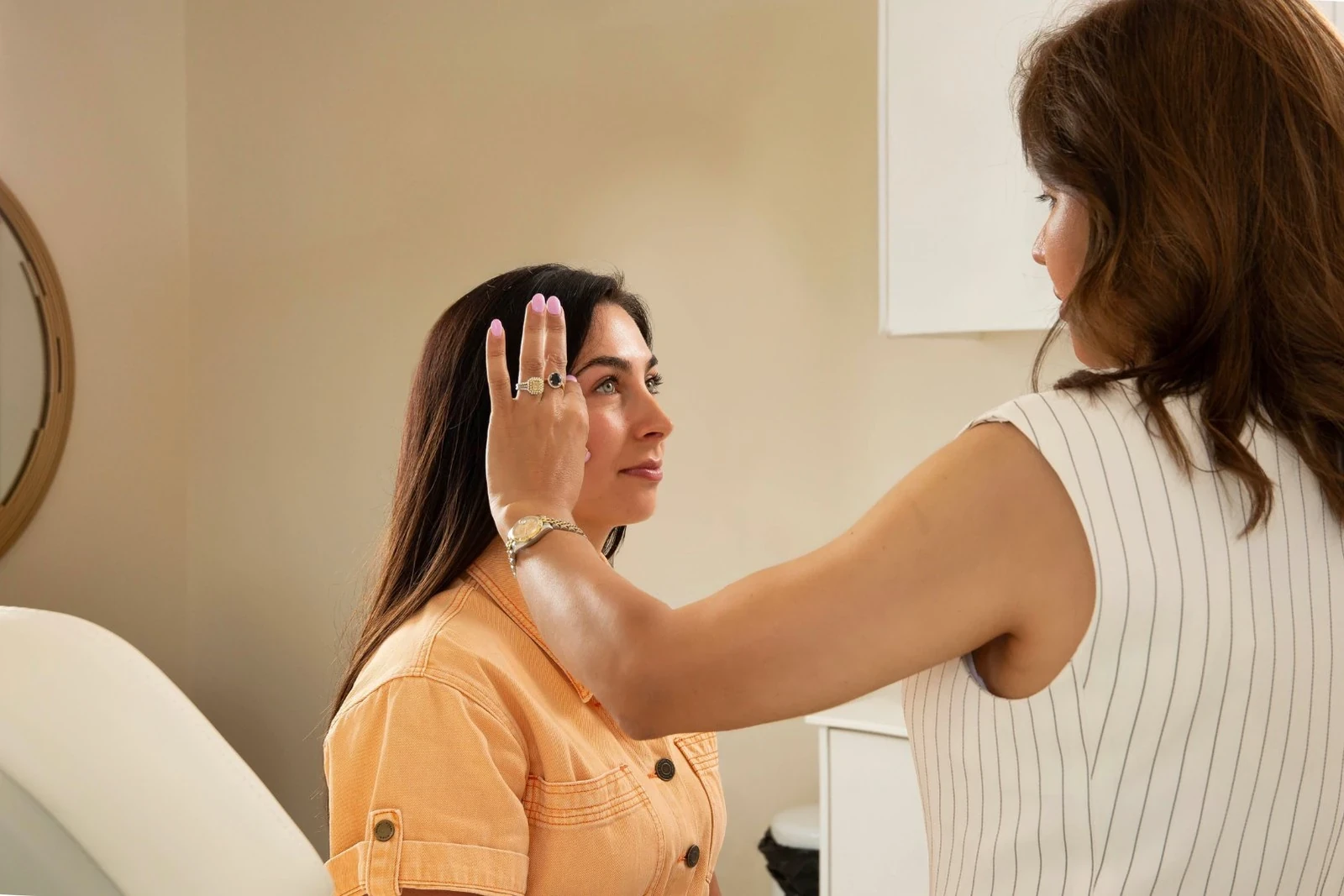
Your consultation at our Brisbane clinic starts with a conversation about your concerns and what you would like to achieve. We review your medical history, carefully assess your skin and the pattern of redness and visible vessels, and use VISIA skin analysis where appropriate to gain a better understanding of your skin's condition. We then explain our findings, discuss the treatment options that may be suitable for you, and answer your questions so you have a clear understanding of the benefits, possible risks, and alternatives before deciding whether to proceed. Risks & Complications →
Listening
Assessment
Options
Treatments We
May Discuss
The treatments listed here are examples of what may be considered for rosacea and facial redness. They are not a treatment plan and do not mean you will need all of them. Your recommendation may include one option, a combination, or a different approach altogether after your skin has been properly assessed at our Newstead clinic in Brisbane.
Skincare Plan & Prescribed Treatment
This is the foundation of every rosacea plan, and the part that holds your control for the long term. The aim is to rebuild and protect a reactive skin barrier, not strip it. We will usually suggest a gentle, non-foaming cleanser, a ceramide-rich moisturiser, niacinamide to help with inflammation, and a daily broad-spectrum SPF 50+ with a mineral block. That sunscreen is the single most important thing you can do for rosacea, especially under the strong Brisbane sun. Where it helps, we can also prepare a customised skincare plan in the clinic, matched to what your skin needs. We also take away the things that tend to aggravate it for a settling period: strong actives, alcohol-based toners, foaming cleansers, fragrance, and high-strength retinoids. Where prescription treatment is needed, your GP coordinates it, and we work in step with that plan.
Lumecca IPL
Intense pulsed light is the main treatment for the broad background redness and the small surface vessels of rosacea. The light is taken up by the haemoglobin (the red pigment) inside those vessels. It heats them so the body slowly clears them over the following weeks. The background redness lifts, and the small visible vessels (telangiectasia) fade or disappear. A typical course is three to four sessions, four weeks apart, with one or two top-up sessions a year for most people. It suits fair to light-medium skin best. Darker skin is usually treated with a vascular laser instead, to avoid changes in pigment.
Vascular Laser
A laser tuned to the colour of blood in the vessels. We use it for the individual visible vessels (telangiectasia) that IPL has not fully cleared, and for broad rosacea redness in darker skin where IPL is not suitable. The laser is more focused on the vessel walls than IPL's broader light, so it works well on the larger, more defined vessels around the nose and the edges of the cheeks. It is often paired with IPL across a course: IPL for the broad pink, the vascular laser for the individual vessels.
Laser Genesis
A gentle laser that warms the deeper layer of the skin to reduce broad redness, calm low-level inflammation, and slowly support collagen, without targeting the visible vessels the way IPL does. It feels warm, has no downtime, and is well tolerated by all skin types, including those that cannot have IPL. It is useful as a maintenance step between IPL courses, for steady low-level redness that vascular treatments have already softened, and for darker skin where IPL is not suitable.
Healite II LED
A low-level light treatment. Its near-infrared and yellow light helps reduce inflammation, supports the skin barrier as it recovers, and calms redness after a procedure. Because it does not use heat, it does not aggravate the heat sensitivity of rosacea. That makes it useful both as a calming session on its own during a flare and as a recovery step after IPL or vascular laser. It is often added between vascular treatments to help hold things steady.
Skin Peels
A small, carefully chosen range of medical-grade peels, used when the bumpy type of rosacea is the main feature, and only once the skin is settled enough to tolerate them. We choose gentle, calming peels that are kind to a reactive barrier. The stronger resurfacing peels used for other skin concerns are avoided in rosacea. Several gentle peels work better than a few harsh ones. The right peel is very individual, and it is decided at your consultation.
Dermatology & Ophthalmology Referral
Some rosacea needs care beyond in-clinic treatments and skincare. Where a case is severe, or does not respond to treatment, the right next step is a referral to a specialist: a dermatologist for the skin, or an eye specialist where the eyes are involved.
Universkin M Peptides Serum Mist
A peptide serum mist we stock, often discussed as a gentle, no-touch step for skin that looks red or feels reactive after treatment.
Universkin nexultra™ P light Moisturiser
A light moisturiser we stock, often discussed for skin that feels easily irritated.
Biopelle Tensage® Soothing Cream Moisturiser SCA 3 Biorepair Index
A soothing moisturiser we stock, often discussed for skin that looks red or feels reactive.
ZO Skin Health Rozatrol
A daily treatment we stock for skin that looks red or feels reactive.
All cosmetic procedures carry some risk and possible side effects. Whether a treatment suits you, what might rule it out, and the full range of possible complications are all discussed at your consultation. Individual results vary, and no outcome can be guaranteed. Read about Risks & Complications →
A few questions
before a consultation?
If you would rather talk to our team before booking, we are happy to take a thoughtful phone call. No pressure, no obligation. Just a conversation.
Frequently
Asked
We do not fully understand what causes rosacea, but four things come up again and again. First, it runs in families, especially fair-skinned families of Northern European background. Second, the small blood vessels in the cheeks, nose, chin, and forehead are over-reactive and flush too easily. Third, there is an imbalance in the tiny mites and bacteria that naturally live on everyone's skin (in particular a mite called Demodex). And fourth, the skin barrier is more reactive to heat, light, and certain ingredients than ordinary skin. Triggers like sun, heat, alcohol, spicy food, stress, hard exercise, and some skincare do not cause rosacea, but they reliably flare it in someone who already has it.
Rosacea is a long-term condition and there is no cure, but it can be calmed until it is barely noticeable. The aim is the same as for any long-term skin condition: settle it down, keep it settled with maintenance, and respect your triggers. Most people reach a steady, settled state with a mix of barrier-supportive skincare, any prescription treatment your GP coordinates, and in-clinic procedures for the visible vessels and background redness. The underlying tendency stays, but the day-to-day look can be calmed a great deal. Individual results vary.
Rosacea and acne can look similar, since both can cause red bumps on the face, but they are different conditions with different causes. Acne starts in the oil glands and hair follicles: blocked pores, too much oil, a bacterium called Cutibacterium acnes, and inflammation. Its signature is comedones, which are blackheads and whiteheads, and it can leave acne scarring behind. Rosacea starts with over-reactive blood vessels and inflammation in the central face. It has no blackheads, and it shows up as flushing, lasting redness, small visible vessels, and in some types red bumps and pustules without true blackheads. Acne is most common in teenagers and young adults. Rosacea is most common in adults aged thirty to fifty, especially those with fair skin. The treatments overlap in places, but they are not interchangeable, which is why getting the diagnosis right matters.
The triggers reported most often are sun, hot weather, heat from cooking or saunas, alcohol (red wine especially), spicy food, hot drinks, stress, hard exercise, and some skincare ingredients (retinoids at the wrong strength, alcohol-based toners, foaming cleansers, fragrance, and some acids). Triggers are personal. Keeping a simple trigger diary for two to three weeks usually shows up the two or three that reliably flare your skin. Avoiding those, along with steady daily sun protection, is one of the few things only you can do for your rosacea, and it makes everything else work better.
Intense pulsed light (IPL) is a broad-spectrum light treatment. Its filtered light is taken up by the haemoglobin (the red pigment) in the small surface blood vessels that drive rosacea redness. The light heats those vessels until they seal off, and the body slowly clears them over the following weeks. The broad redness lifts, and the small visible vessels (telangiectasia) fade or disappear. A standard course is three to four sessions, four weeks apart, with a top-up once or twice a year for most people. IPL suits fair to light-medium skin. Darker skin is usually treated with a vascular laser instead, to avoid changes in pigment. Individual results vary.
Vascular treatments reduce the redness and visible vessels you have now, but new vessels can form over time, because the over-reactive vessels of rosacea do not go away. Most people see a clear improvement that lasts twelve to eighteen months, with top-up sessions once or twice a year to hold it. Steady daily sun protection (a broad-spectrum SPF 50+ with a mineral block) is the single biggest factor in how long the results last, followed by avoiding your personal triggers. Whether it suits you, and what to realistically expect, is decided at your consultation. Individual results vary.
All cosmetic procedures carry some risk, including bruising, swelling, unevenness, infection, effects on the blood vessels, and a result you are not happy with. The specific risks depend on the treatment, and we explain them in full at your consultation and again on the day. You can read more on our Risks & Complications page.

Dr Fatemeh Asadi MD, FRACGP
GP & Cosmetic Physician · Founder, Body Dezign House
Ready for a
Consultation or Treatment?
Book a time with Dr Asadi or her team at our Newstead clinic in Brisbane. New here? Begin with a consultation. Already consulted, or following a treatment plan you've discussed? Book your next session, or reach out with any other enquiry.