
This page explains acne scar revision at Body Dezign House, a cosmetic medicine clinic in Newstead, Brisbane. Care is overseen by Dr Fatemeh Asadi, MD, FRACGP (AHPRA MED0000975343), a GP & Cosmetic Physician with two decades in cosmetic medicine and general practice. Acne scar treatment is staged across several sessions and matched to each scar type, with realistic timelines discussed at a no-obligation consultation in Newstead, Brisbane. Individual results vary.
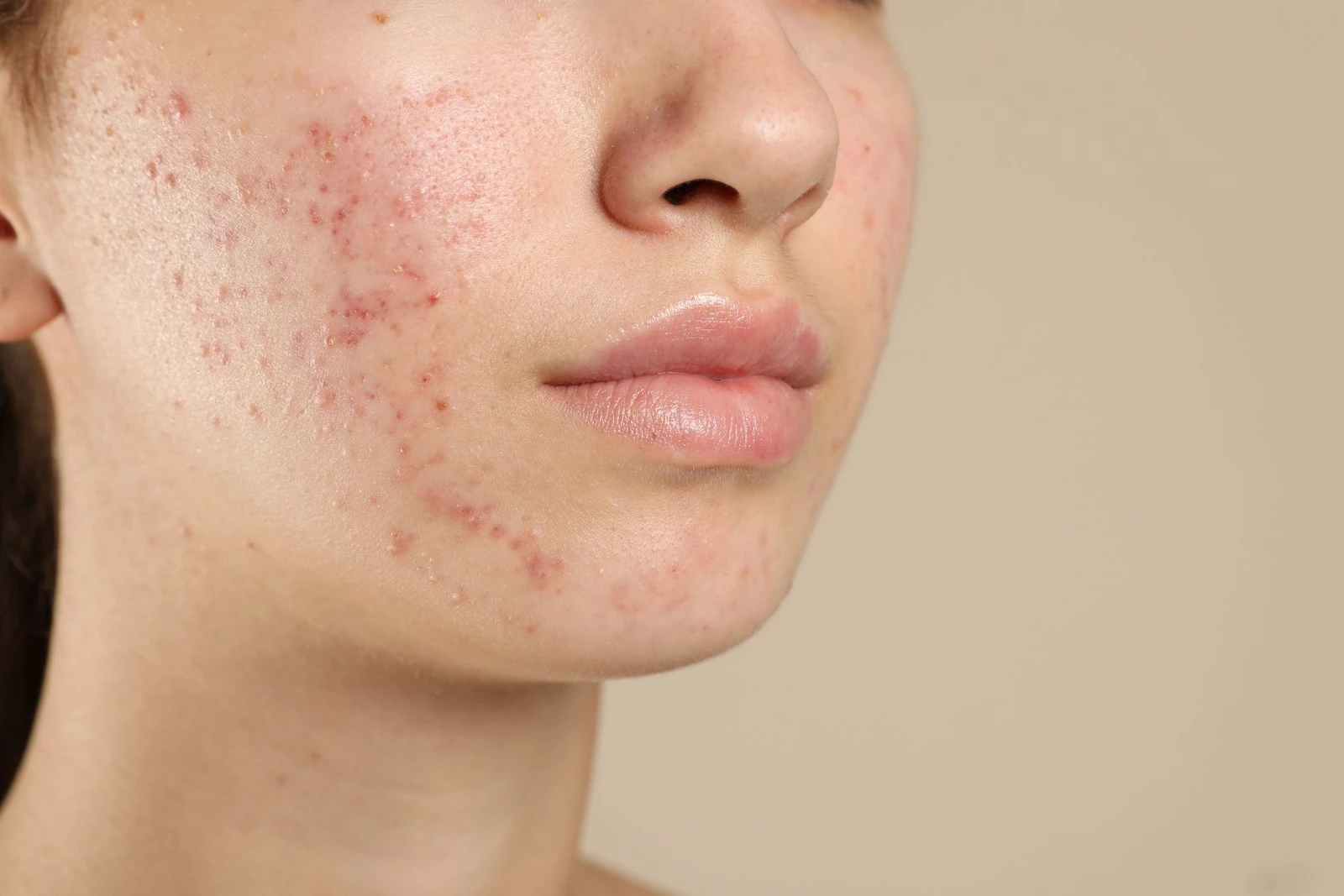
Acne Scarring & Skin TextureNewstead, Brisbane
Body Dezign House is a doctor-led clinic in Newstead, Brisbane. Acne scars do not all look the same, and they do not all respond to the same treatment. Most people have a mix. There may be shallow rolling dips across the cheeks, small deep ice-pick marks, wider box-car pits, and sometimes raised marks left by deeper cysts. Each kind needs its own approach. The best results come from matching the right treatment to the right scar, in the right order. With a well-planned course, many people see a good overall improvement, though every person is different and individual results vary. At Body Dezign House in Newstead, your consultation is guided by your skin, looks at the whole picture, and carries no obligation to go ahead.
Acne scar treatment is not one procedure. It is a series of small, specific choices: the right approach, for the right scar, in the right order. The people who do best are the ones who see this as a six to twelve month project, not a single treatment day.Dr Fatemeh Asadi, MD, FRACGP
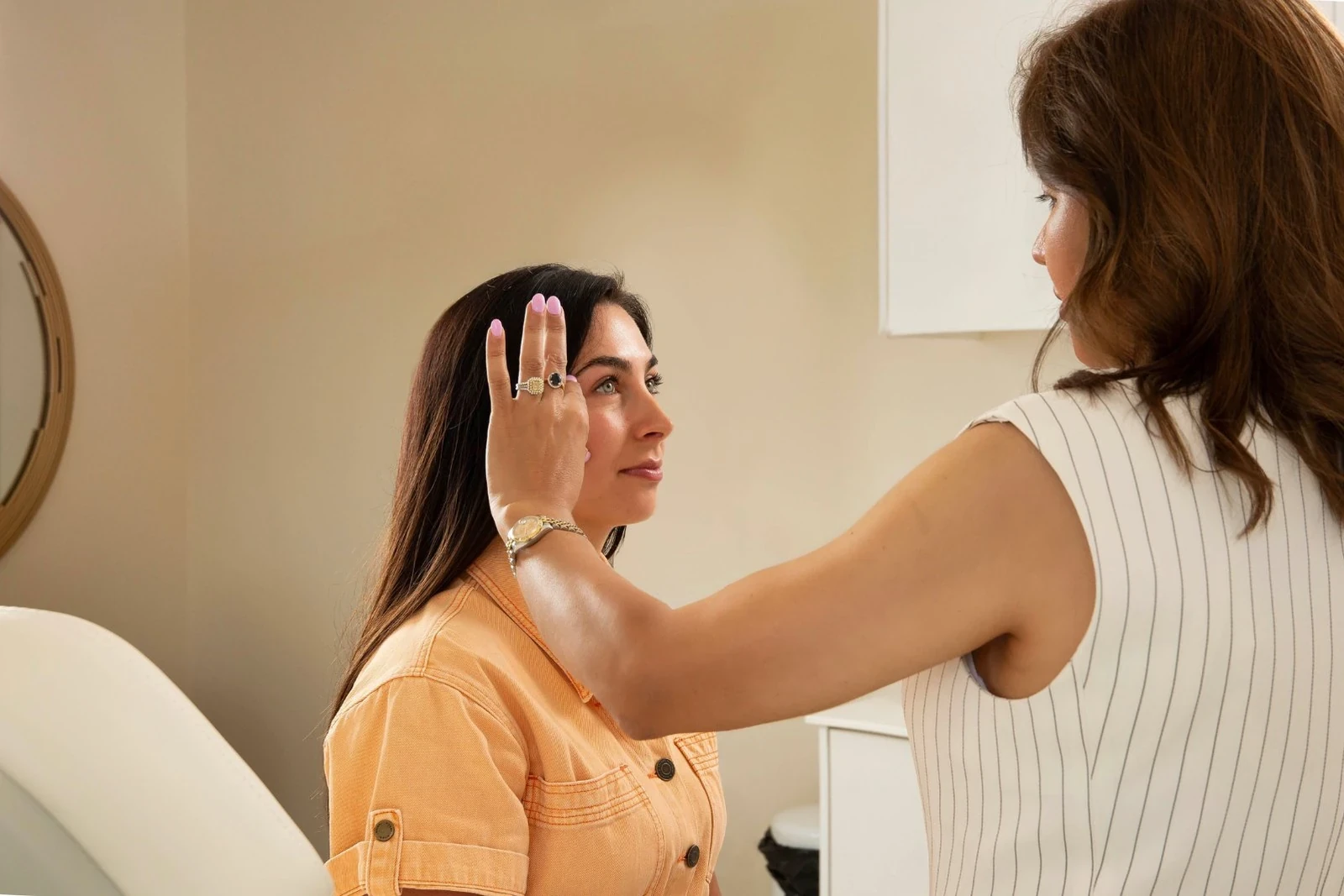
Dr Fatemeh Asadi, MD, FRACGP brings two decades in cosmetic medicine and general practice to every consultation. She is a Key Opinion Leader for Merz Aesthetics and an Official Trainer for Aptos Threads. This reflects her ongoing role in cosmetic medicine education, including attending national and international conferences, training other doctors and nurses, and contributing her clinical knowledge to the wider medical aesthetics community.
Our approach is careful and honest. We look at what is really driving your concern. It might be the type and depth of your scars, the marks left behind after breakouts, your skin type and how it heals, or a mix of these. We also look at whether any treatment is genuinely right for you.
Types of Acne Scars
& Optimal Treatments
Acne scarring falls into three groups: sunken (atrophic) scars, raised (hypertrophic or keloid) scars, and the flat marks left behind, which are the brown and red post-inflammatory marks. Each group is treated differently, and most people have a mix. So the plan starts by working out which kinds are present, then matching the right approach to each. We see people from right across Brisbane for this work.
Indented
Atrophic Scars
This is the umbrella name for all the sunken or pitted scars, which happen when the skin loses collagen as it heals. Most acne scarring sits here, in three shapes: rolling scars (shallow, wave-like dips held down by small bands beneath the skin), ice-pick scars (narrow, deep pits) and box-car scars (round or oval pits with steep sides and a flat floor). Each one has its own best approach, and most faces have a mix. The mainstay is RF (radiofrequency) microneedling, such as Morpheus 8 or Vivace, which prompts the skin to make new collagen and lift the scar from underneath. Skin Booster and Rejuran may be used alongside this to help restore the fullness that scarring took away.
Rolling
Scars
Shallow, wave-like dips about four to five millimetres across, most often on the cheeks and temples. They are held down by small fibrous bands under the skin. The usual approach combines RF microneedling with Skin Booster or Rejuran to help restore fullness, in a staged plan. For mild rolling scars, RF microneedling on its own is often enough.
Ice Pick
Scars
Narrow, deep pits. They are too deep for resurfacing on its own, and need a focused technique matched to that shape. We assess whether they suit our approaches at your consultation.
Box Car
Scars
Round or oval pits with steep sides and a flat floor, a bit like small craters, and wider than ice-pick marks. They respond well to RF microneedling (Morpheus 8 or Vivace), which prompts new collagen to lift the scar floor. Deeper box-car scars may also benefit from more intensive resurfacing, which we discuss at your consultation.
Dark & Red Spots
Post-Inflammatory Marks
Flat marks left behind by past breakouts. The brown ones are post-inflammatory hyperpigmentation (PIH), and they are more common in olive and darker skin. The pink or red ones are post-inflammatory erythema (PIE), and they are more common in lighter skin. Neither is a true scar, and both usually fade on their own over six to twelve months, but the right care speeds that up. At home: brightening products (vitamin C, kojic acid, azelaic acid, niacinamide), a retinoid, and a high-factor SPF every single day to stop the marks getting darker. In clinic at Body Dezign House: gentle peels (BHA, glycolic, lactic), Clear & Brilliant for surface texture and pigment, and Healite II LED to calm redness. For more stubborn marks: in-clinic options such as vascular laser for lasting redness, discussed at your consultation.
Hypertrophic
& Keloid Scars
Raised, thick scars that form when the skin makes too much collagen as it heals. The usual approach is an anti-inflammatory treatment placed into the scar, along with vascular laser to settle redness. We assess whether this suits our scope at your consultation.
Acne scars often go deeper than what you see on the surface. My approach is to take the time to work out the type of scar first. Then I choose the treatments most likely to make a real difference, and I am honest with you about what to expect at every step.Dr Fatemeh Asadi MD, FRACGP · GP & Cosmetic Physician
Your Consultation
in Brisbane
Your consultation at our Brisbane clinic starts with a conversation about your concerns and what you would like to achieve. We review your medical history, carefully assess your acne scars and the surrounding skin, and use VISIA skin analysis where appropriate to gain a better understanding of your skin's condition. We then explain our findings, discuss the treatment options that may be suitable for you, and answer your questions so you have a clear understanding of the benefits, possible risks, and alternatives before deciding whether to proceed. Risks & Complications →
Listening
Mapping & Assessment
Plan & Options
Treatments We
May Discuss
The treatments listed here are examples of what may be considered. They are not a treatment plan and do not mean you will need all of them. Your recommendation may include one option, a combination, or a different approach altogether, spread across several sessions over six to twelve months, after your skin has been properly assessed at our Newstead clinic in Brisbane. Some scar patterns sit outside what we offer, and we focus on the parts that fit our scope.
Skincare Plan & Topical Care
A simple daily routine that supports the scar work and helps fade brown and red marks. We use VISIA skin analysis to understand your skin in detail, and from that we can make a customised in-clinic serum tailored to your skin. A retinoid helps even out surface texture and keep breakouts in check, and a daily SPF 50+ is the one non-negotiable. That last point really matters in Brisbane. Even a little sun on healing skin can darken those marks for months. Skincare is what holds the results in place between treatments.
Morpheus 8
An RF (radiofrequency) microneedling treatment. Fine, gold-coated channels carry radiofrequency energy into the deeper skin, at a depth we can adjust up to about four millimetres. The mix of microneedling and gentle warmth breaks down old, disorganised scar collagen and prompts the skin's own collagen-making cells to lay down fresh, tidy collagen in its place. It is our go-to for rolling and shallow box-car scars, and it suits a wide range of skin tones, because the energy is not drawn to pigment. That means a lower chance of brown marks afterwards than with some light-based treatments. A typical course is three to six sessions, four to eight weeks apart. Downtime is usually one to three days, and the skin keeps building collagen for six to twelve months after the last session.
Vivace RF Microneedling
A second RF microneedling option. It uses 36 gold-plated channels and delivers the radiofrequency in pulses, which is designed to feel more comfortable during treatment. It works in the same way as Morpheus 8, using microneedling plus gentle warmth to prompt new collagen, but its slightly different design suits some scar patterns better. We choose between Morpheus 8 and Vivace based on the scar type, how deep the scars are, your skin thickness, and what we see when we look in person. Quite often both are useful within one course of treatment, used on different areas.
Skin Peels
Medical-grade peels chosen for scar work usually lean on salicylic acid, glycolic acid, and lactic acid. They do two jobs: smooth and brighten the skin around the scars, and fade brown marks. A series of gentler peels works better than a few strong ones, especially in olive and darker skin, where stronger peels carry more risk of pigment changes. Stronger focal resurfacing for ice-pick scars sits outside what we offer here.
Skin Needling with Premium Serum
Medical-grade microneedling at gentle depths, paired with carefully chosen premium serums applied during and just after treatment. The tiny channels help carry the active ingredients into the upper skin. It suits mild to moderate scarring and newer scars, where the aim is better surface texture and overall skin quality rather than the deeper work that RF microneedling does. We often use it between RF sessions to keep things ticking along, or on its own for people who mostly have shallow scars and brown or red marks.
Clear & Brilliant
A gentle, non-ablative fractional laser that uses two wavelengths (1440nm and 1927nm). The 1927nm setting works on the most surface layers of the skin and lightly exfoliates them, which helps with fine texture, brown marks, and the general rough look around healed acne. It pairs well with RF microneedling for the surface side of things, and it is especially useful in lighter skin. Conservative settings and good aftercare help keep the risk of any pigment flare low.
CO2 Laser Resurfacing
An ablative fractional CO2 laser that makes tiny, controlled channels in the skin, which prompts new collagen and helps with sunken acne scars, enlarged pores, and surface texture. It may suit acne scarring where it is clinically right, and once any active acne is fully under control. Whether it suits you depends on your skin type, your scar pattern, how much downtime you can take, and a proper medical assessment. We work this out at your consultation.
CoolPeel CO2 Laser
CoolPeel is a lighter CO2 resurfacing option with less social downtime, which may suit you if recovery time is a concern. It helps with surface texture, enlarged pores, and mild marks, without the longer recovery of full resurfacing. We work out whether it suits you at your consultation.
Skin Booster
An in-clinic treatment that may help where sunken scars have lost some fullness, rather than being held down by bands. It is often considered for rolling and shallow box-car scars. We sometimes pair it with RF microneedling within the same course, so one supports fullness while the other prompts new collagen. How well it suits you, how it is used, and how long the effect lasts are all things we work through with you in person. This is only decided at a full consultation.
Rejuran (Polynucleotide Skin Booster)
A treatment we may consider for the look and feel of the skin around acne scars, helping with firmness, texture and hydration, as well as for sunken scars themselves. Unlike treatments aimed mainly at adding fullness, this one works more by supporting the skin's own repair over time. It is usually given as a course of three to four sessions, two to four weeks apart, with results that build gradually over the following months. Whether it suits you, and how it fits with the rest of your plan, is decided at a full consultation.
PRX-Plus
A next-generation topical treatment from WiQo in Italy. It combines stabilised acids that support the skin's collagen without the visible peeling or downtime of a normal peel. It works on the deeper layers of the skin while leaving the surface settled. It is handy as a maintenance step between RF microneedling sessions, and for people with mild to moderate scarring who want steady improvement without recovery time.
Healite II LED
Low-level light therapy using two wavelengths. The 630nm (red light) component reduces inflammation and accelerates healing after RF microneedling, peels and skin needling. The 830nm (near-infrared) component penetrates more deeply, supporting vascular regeneration and collagen repair in healing skin. Healite II is non-thermal, which means it does not aggravate inflammation, and is useful both as a standalone treatment for post-inflammatory erythema and as a recovery support after more active procedures. At our Newstead clinic in Brisbane, Healite II is often built into scar revision plans as a regular maintenance step.
All cosmetic procedures carry some risk and possible side effects. With scar treatment, we get any active acne under control first, and we spread the work across several sessions over six to twelve months. Whether a treatment suits you, what might rule it out, and the full range of possible complications are all discussed at your consultation. Individual results vary, and no outcome can be guaranteed. Read about Risks & Complications →
A few questions
before a consultation?
If you would rather talk to our team before booking, we are happy to take a thoughtful phone call. No pressure, no obligation. Just a conversation.
Frequently
Asked
Acne scars form when inflammation reaches deep into the skin. Deep, inflamed acne, such as cysts, nodules and deep papules, damages the collagen and elastin underneath. As the skin heals, it can make too little new collagen, which leaves a sunken scar, or too much, which leaves a raised one. The biggest thing that decides whether you scar is how long the acne stayed inflamed before it was treated. Picking makes it worse. Family history, deep or long-lasting acne, and adult jawline cystic acne all carry a higher risk. True scars are permanent changes in the skin. That is different from the brown or red marks left after a breakout, which fade on their own.
Yes. With a well-planned course, a good overall improvement is realistic, and people with shallow box-car or ice-pick scars can sometimes see even more. The key word is overall. Most scars will improve, though not necessarily every single one seen under a certain light at a certain angle. Treatment is spread across several sessions over six to twelve months, and most people in Brisbane need more than one approach, because most people have more than one type of scar. Permanent scars cannot be erased completely, but they can be made much less noticeable. Individual results vary.
True acne scars are sunken or raised changes in the skin, caused by losing or making too much collagen. The flat brown marks left after a pimple are post-inflammatory hyperpigmentation (PIH), and the flat pink or red marks are post-inflammatory erythema (PIE). PIH and PIE usually fade on their own over months, though skincare, peels, daily sun protection, and, for the red marks, vascular laser can speed that up. They are not true scars, and they need different treatment from sunken or raised scarring.
Yes. In fact, treating scars early is now thought to be better than waiting until the acne has fully cleared. The thinking has shifted towards starting sooner, because younger scars respond more easily than older ones. As long as any active inflammation is kept under control, RF microneedling such as Morpheus 8 and Vivace, gentle peels, skin needling, skin boosters and AviClear can all go ahead alongside your acne treatment.
It depends on the treatment, and we will discuss this with you at your consultation in Brisbane. Individual results vary.
We offer a range of approaches for acne scarring, from CO2 laser resurfacing through to chemical peels, including RF microneedling with Morpheus 8 or Vivace, skin needling, skin boosters and Rejuran. The right combination for your scar types is something we discuss with you at your consultation in Brisbane.
All cosmetic procedures carry some risk, including bruising, swelling, unevenness, infection, problems with blood vessels, and not getting the result you hoped for. The exact risks depend on the treatment, and we explain them in full at your consultation and again on the day. You can read more on our Risks & Complications page.
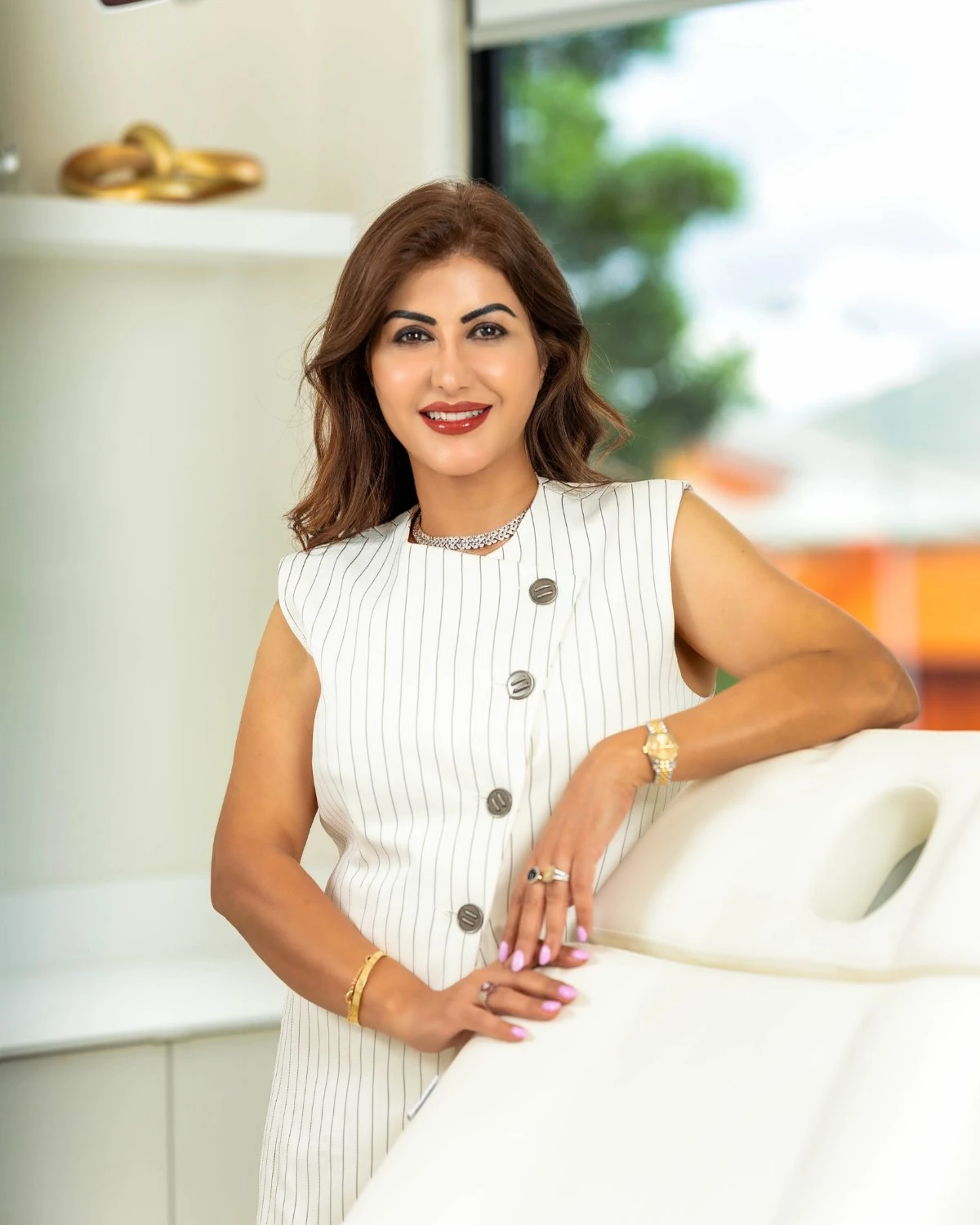
Dr Fatemeh Asadi MD, FRACGP
GP & Cosmetic Physician · Founder, Body Dezign House
Ready for a
Consultation or Treatment?
Book a time with Dr Asadi or her team at our Newstead clinic in Brisbane. New here? Begin with a consultation. Already consulted, or following a treatment plan you've discussed? Book your next session, or reach out with any other enquiry.