
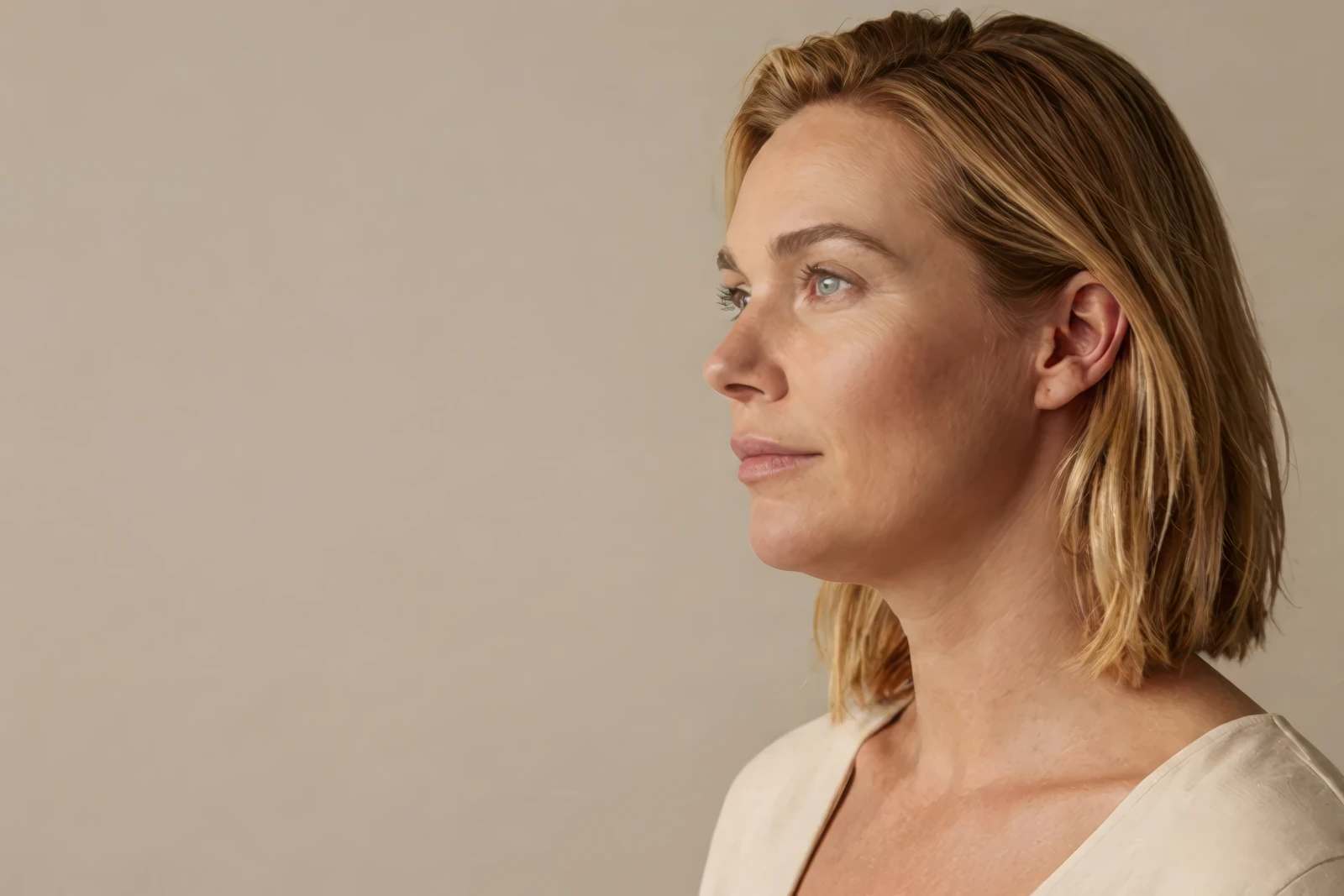
Double Chin or Submental FullnessNewstead, Brisbane
Body Dezign House is a doctor-led clinic in Newstead, Brisbane. A defined chin and neck depend on more than fat: the skin, the muscle, the deeper tissue, and the bone behind all play a part. Every consultation here looks at these layers together, is guided by your own anatomy, and carries no obligation to go ahead.
Double Chin or Submental Fullness
in Brisbane
The area under your chin, where the chin meets the neck, is made up of several layers. There is the skin, the fat that sits above the muscle, the muscle itself, a deeper layer of fat, and the bone behind it all. A double chin can come from any one of these, or from a few of them together. So the first thing I do is work out which layer is making the difference for you. Fullness that is mostly fat needs a different approach to one caused by loose skin, by neck muscle bands, or by a chin that sits a little far back. Your jawline usually comes into the same conversation, because the chin and the jaw read together when you see yourself side-on.
People describe this in their own way. Some point to a soft "second chin" in photos taken from below. Some feel their jawline is not as sharp as it was in their twenties or thirties. Others mention a "turkey neck", or a side profile that has "lost its angle" over the years. Underneath those everyday words are a few simple things. There is the angle your chin makes with your neck, the fat that sits above the neck muscle, and skin that loosens a little with age. Each one adds its own share to how things look. My job is to name which one is doing the most work for you.
Age adds a few changes of its own. Through our forties and fifties, the jawbone slowly loses a little height, so the jawline can look shorter from below. The fat that supports the lower face settles downward. The neck muscle loosens at its front edges, which can show as soft vertical bands. And the skin thins and loses some of its spring, so it drapes more easily over whatever sits beneath. This is why two people with the same amount of fat under the chin can look quite different. It comes down to what the bone, the muscle, and the skin are each doing. These changes often go hand in hand with the lower face softening more generally, which is usually why people start thinking about the chin and jaw together.
A double chin can look quite different on a man than on a woman, and that comes down to anatomy, not just appearance. A man's neck usually has a stronger neck muscle and firmer bone support, so a sharp angle between the chin and neck is part of a strong jawline. When fullness forms here, it is often the fat above the muscle and the muscle bands that show most. And because the skin is thicker, it tends to hold its shape for longer. A woman's neck is generally thinner-skinned, so the fat tends to settle into a softer, smoother line. This can change quite quickly around perimenopause. As oestrogen drops, the collagen and elastin that keep skin firm start to fade, and the angle can soften over just a few years. Every person is different, so I look at what is actually happening for you, rather than holding anyone to one 'ideal' neckline.
Our Newstead clinic sits in Brisbane's inner north, a short drive from the CBD, and we look after people from across Brisbane, including New Farm, Teneriffe, Fortitude Valley, Hamilton, Ascot, and Bowen Hills. Wherever you are coming from, your assessment starts the same way: an unhurried conversation, guided by your own anatomy.
About Dr AsadiA double chin is rarely just fat. The skin, the neck muscle, the fat above and below it, and the bone behind all play their part, and a clear jawline comes from all of them working together. My job is to read each one on its own, and to be honest about what we can help without surgery and what we can't.Dr Fatemeh Asadi, MD, FRACGP
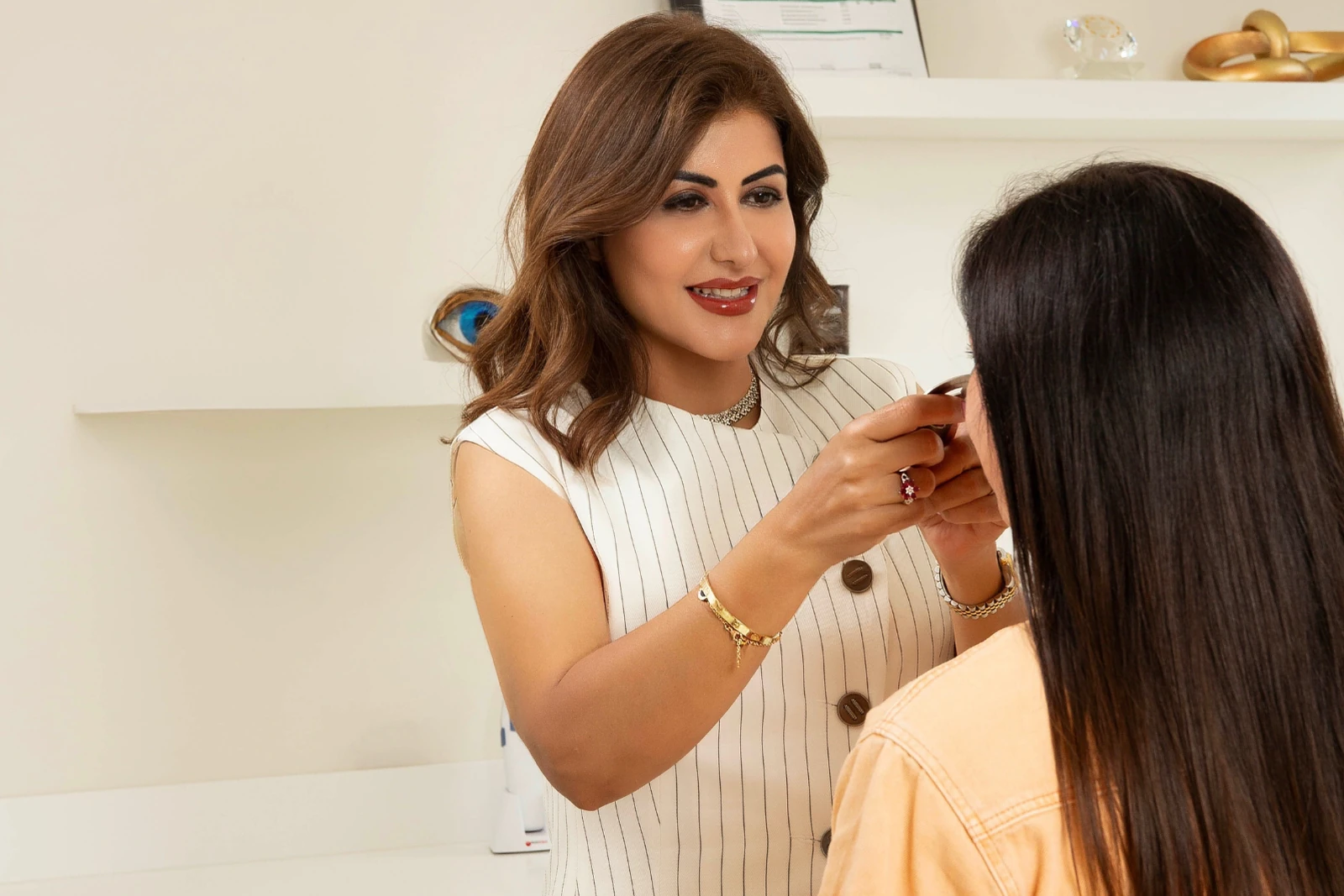
Dr Fatemeh Asadi, MD, FRACGP brings two decades in cosmetic medicine and general practice to every consultation. She is a Key Opinion Leader for Merz Aesthetics and an Official Trainer for Aptos Threads. This reflects her ongoing role in cosmetic medicine education, including attending national and international conferences, training other doctors and nurses, and contributing her clinical knowledge to the wider medical aesthetics community.
Her approach is careful and honest. For the area under the chin, that means looking at each layer: the skin, the fat above the muscle, the muscle itself, the deeper fat, and where the chin sits behind it all. Only then does she talk about whether any treatment is genuinely right for you.
Areas Commonly
Assessed
A double chin involves several layers packed into one small area. There is the skin on top, the fat above and below the neck muscle, the muscle itself, and the chin and bone that set the angle behind. At our Newstead clinic in Brisbane, we look at each layer on its own before talking about any treatment.
Fat Above
the Muscle
This is the fat that sits just under the skin, above the neck muscle. It is the layer most people picture when they think of a double chin. I check how thick it feels, and how it sits when you look straight ahead versus chin to chest. I also work out how much of the fullness it is really responsible for, compared with the deeper layers.
The Neck Muscle
& Its Bands
The platysma is a thin sheet of muscle across the front of the neck. With age, and the way we hold our heads, its front edges can pull apart a little and show as vertical bands running from the jaw down towards the collarbone. I check whether those bands only appear when you tense the neck, whether they are there at rest, and how much they add to the overall shape.
Skin Quality
& Firmness
How the skin sits over everything beneath it depends a lot on collagen, elastin, how hydrated it is, and past sun exposure. Two people with the very same amount of fat can look quite different, just because of their skin.
Jawline
Definition
How sharp your jawline looks from the side and from below is part of the same picture. When the jaw edge softens, often from bone changes and tissue settling lower, the same amount of fullness under the chin can look more obvious.
The Chin-to-Neck Angle
& the Chin Behind
The angle your chin makes with the front of your neck is what gives a side profile its definition. A chin that sits a little far back, or natural changes in the bone, can flatten that angle on their own, even when there is not much fat there. So I always look at the angle alongside the softer layers, because reducing fat alone will not change an angle that is set by the bone. If a chin that sits back is part of the picture, we can look at that in the same visit.
Posture &
Lifestyle Factors
Holding your head forward, long hours looking down at screens, big changes in weight, and simple family traits all play a part. I make a note of these, because they shape what a lasting result actually looks like for you.
When the line from chin to neck softens, it is rarely one thing. Usually it is a few layers at once: fat that has settled, a neck muscle whose bands are starting to show, and a jawline that has lost a little of its edge. A good consultation looks at each one on its own, and is honest about what we can help without surgery, and what is better suited to a surgical conversation.Dr Fatemeh Asadi MD, FRACGP · GP & Cosmetic Physician
Your Consultation
in Brisbane
Your consultation at our Brisbane clinic starts with a conversation about your concerns and what you would like to achieve. We review your medical history, carefully assess the chin and neck, and use VISIA skin analysis where appropriate to gain a better understanding of your skin's condition. We then explain our findings, discuss the treatment options that may be suitable for you, and answer your questions so you have a clear understanding of the benefits, possible risks, and alternatives before deciding whether to proceed. Risks & Complications →
Listening
We start with a private, relaxed chat. You tell us what you have noticed about your jaw and the area under your chin, what you see in photos taken from below, and what matters to you. Then we go through your medical history. That covers any past neck or face procedures, your weight over time, your thyroid, any trouble swallowing or breathing, the medicines you take, allergies, and your general health. As part of good care, we also gently ask how you feel about your appearance, so that anything we discuss is truly in your interest.
Assessment
We examine the area under your chin both at rest and as you bring your chin to your chest. We look at the skin, the fat above the muscle, the muscle itself, the deeper fat, the jaw edge, and where the chin sits behind it all. We also use VISIA, AI-driven skin imaging. It shows in fine detail what the eye alone cannot: surface texture, sun damage, and the exact line where the chin meets the neck. You see exactly what we see.
Options
Once we have examined you, we talk you through the options that suit you best. These might include fat reduction, muscle softening, jawline support, energy-based skin treatments, or thread lifts. Sometimes the honest answer is a referral for a surgical opinion, such as a neck lift or chin surgery, and we will say so openly. And choosing not to go ahead is always a fair choice, respected without any pressure. If something is not right for you, we will tell you plainly.
Treatments We
May Discuss
The treatments listed here are examples of what may be considered. They are not a treatment plan and do not mean you will need all of them. Your recommendation may include one option, a combination, or a different approach altogether after your skin has been properly assessed at our Brisbane clinic.
Submental Fat Reduction
This helps reduce a pocket of fat sitting above the neck muscle. It only works on that surface layer of fat. The deeper fat, the muscle, and the skin are not changed by it, and we look at those separately. Whether it suits you, which areas to treat, and which treatment fits your anatomy is only decided at a full consultation.
Platysmal Band Softening
This gently softens the neck muscle where its front bands show. We consider it when those vertical neck bands are a real part of the shape under the chin. Whether it suits you, and which treatment and areas fit your anatomy, is only decided at a full consultation.
Jawline Contouring
This supports and defines the edge of the jawline. We consider it when a soft or under-supported jaw is adding to the fullness under the chin and flattening the chin-to-neck angle. How long it lasts depends on the treatment used and how your body responds. Whether it suits you, which areas to treat, and which treatment fits your anatomy is only decided at a full consultation.
Ultherapy
This uses focused ultrasound to reach the deeper layers under the chin and neck, to support and firm the skin. It may help when the fullness comes partly from mild skin looseness and less support underneath. It needs its own consultation.
Aptos Thread Lifts
A gentle lifting treatment that uses fine barbed threads to support the tissue of the face and under the chin. We consider it when the jaw edge and the soft tissue of the lower face are adding to the shape under the chin. Dr Asadi is an Official Trainer for Aptos Threads.
Morpheus8
This pairs radiofrequency energy with microneedling to encourage the skin to firm and renew under the chin and across the neck. It may be worth discussing when skin quality and surface looseness are part of what you are seeing.
Skin Needling
Gentle, controlled microneedling that encourages the skin of the neck to build collagen over a course of sessions. It can help with surface texture and mild looseness where it is suitable.
All cosmetic procedures carry some risk and possible side effects. Whether a treatment suits you, what might rule it out, and the full range of possible complications are all discussed at your consultation. Individual results vary, and no outcome can be guaranteed. Read about Risks & Complications →
Questions about
your profile?
If you would rather talk to our Brisbane team before booking, we are happy to take a phone call. No pressure, no obligation. Just a conversation.
Frequently
Asked
Not always, and we will always be honest with you about that. When a double chin is mostly down to deeper fat, a lot of loose skin, or a chin that sits well back, the best answer may be a surgical opinion. That could mean a neck lift or chin surgery with the right specialist. Treatments at the clinic can help when the fullness comes from the surface fat, from skin quality, or from the neck muscle bands, but they do not suit everyone. We work this out together at a consultation.
A double chin forms when one or more layers under the chin either add fullness or lose the support that once held a sharper line. That might be a heavier pocket of fat, which is often partly in the genes. Or it could be skin that loosens with age, the neck muscle slackening, the way the bones sit, or a chin that rests a little far back. Weight gain, weight loss that leaves loose skin behind, posture, and family traits can all play a part. At a consultation we work out how much each layer is adding for you.
Sometimes, and sometimes only in part. If your fullness is mainly the fat sitting above the neck muscle, losing weight can make a real difference. But if you carry a heavier pocket of deeper fat, have a chin that sits back, or have a lot of loose skin, weight loss may only help part of the picture. It can sometimes even reveal looseness that the fullness was hiding. Individual results vary, so we look at each layer on its own and keep expectations realistic.
It depends on the treatment, which layer we are working on, your own skin and fat, whether your weight stays steady, and your lifestyle. Treatments that reduce fat aim to last as long as your weight holds steady. Those that work on skin or muscle have their own timelines. We will talk you through how long to expect at your consultation, based on the approach we choose for you. Individual results vary.
It can, in some cases. If your skin has already lost some of its firmness, reducing the fat beneath it can reveal looseness that the fullness was holding out. That is exactly why we always check your skin quality first. When loose skin is the main issue, it often makes sense to treat things in a different order, or to take a different approach altogether.
It can be both. Some people notice fullness under the chin as they gain weight. Others have it even when they are slim, because they naturally carry a heavier pocket of fat there, or because of the way their chin and bones sit. Family traits are common, and a double chin can show at a perfectly healthy weight. We work out what is behind yours at a consultation.
Every cosmetic treatment carries some risk. These can include bruising, swelling, unevenness, infection, effects on blood vessels, and a result you are not happy with. The exact risks depend on the treatment, and we explain them in full at your consultation and again on the day. You will find more detail on our Risks & Complications page.

Dr Fatemeh Asadi MD, FRACGP
GP & Cosmetic Physician · Founder, Body Dezign House
Dr Asadi and our team share an approach that is led by anatomy and never rushed. For the area under the chin, that means looking at each layer before any treatment is discussed. That is the skin, the fat above the neck muscle, the muscle itself, the deeper fat, and where the chin sits behind. If an option is not the right tool, or if a surgical opinion is the better next step, we will say so plainly, including a referral when that is the wiser path.
Dr Fatemeh Asadi, MD, FRACGP, draws on two decades in cosmetic medicine and general practice in every consultation. She is a Key Opinion Leader for Merz Aesthetics and an Official Trainer for Aptos Threads, and she remains active in cosmetic medicine education, presenting at national and international conferences, teaching other doctors and nurses, and sharing her clinical experience with the wider medical aesthetics community.
Ready for a
Consultation or Treatment?
Book a time with Dr Asadi or her team at our Newstead clinic in Brisbane. New here? Begin with a consultation. Already consulted, or following a treatment plan you've discussed? Book your next session, or reach out with any other enquiry.