
Body Dezign House is a cosmetic medicine clinic in Newstead, Brisbane, led by Dr Fatemeh Asadi, MD, FRACGP. This page explains how hollow temples and temple volume loss are assessed by Dr Asadi, a GP & Cosmetic Physician with two decades in cosmetic medicine and general practice (AHPRA MED0000975343). Assessment in Newstead is anatomy-guided and looks at bone, muscle, fat, and fascia across the upper face, and how the temple relates to the lateral brow and upper cheek. Every consultation in Brisbane carries no obligation to proceed. Individual results vary.

Hollow Temples & Temple VolumeNewstead, Brisbane
Body Dezign House is a doctor-led clinic in Newstead, Brisbane. Your temples sit where the forehead, brow, and upper cheek meet, and their fullness quietly shapes the look of the upper part of your face. Every consultation here is guided by your anatomy, looks at the temple alongside the rest of the face, and carries no obligation to go ahead.
The temple is one of the most anatomically dense areas on the face. Bone, muscle, fat, fascia, and major vessels all sit within a small region. A hollow temple is rarely a question of just adding volume. It is a question of which layer has thinned, how the surrounding face is reading, and whether restoring the area genuinely suits the person in front of me.Dr Fatemeh Asadi, MD, FRACGP
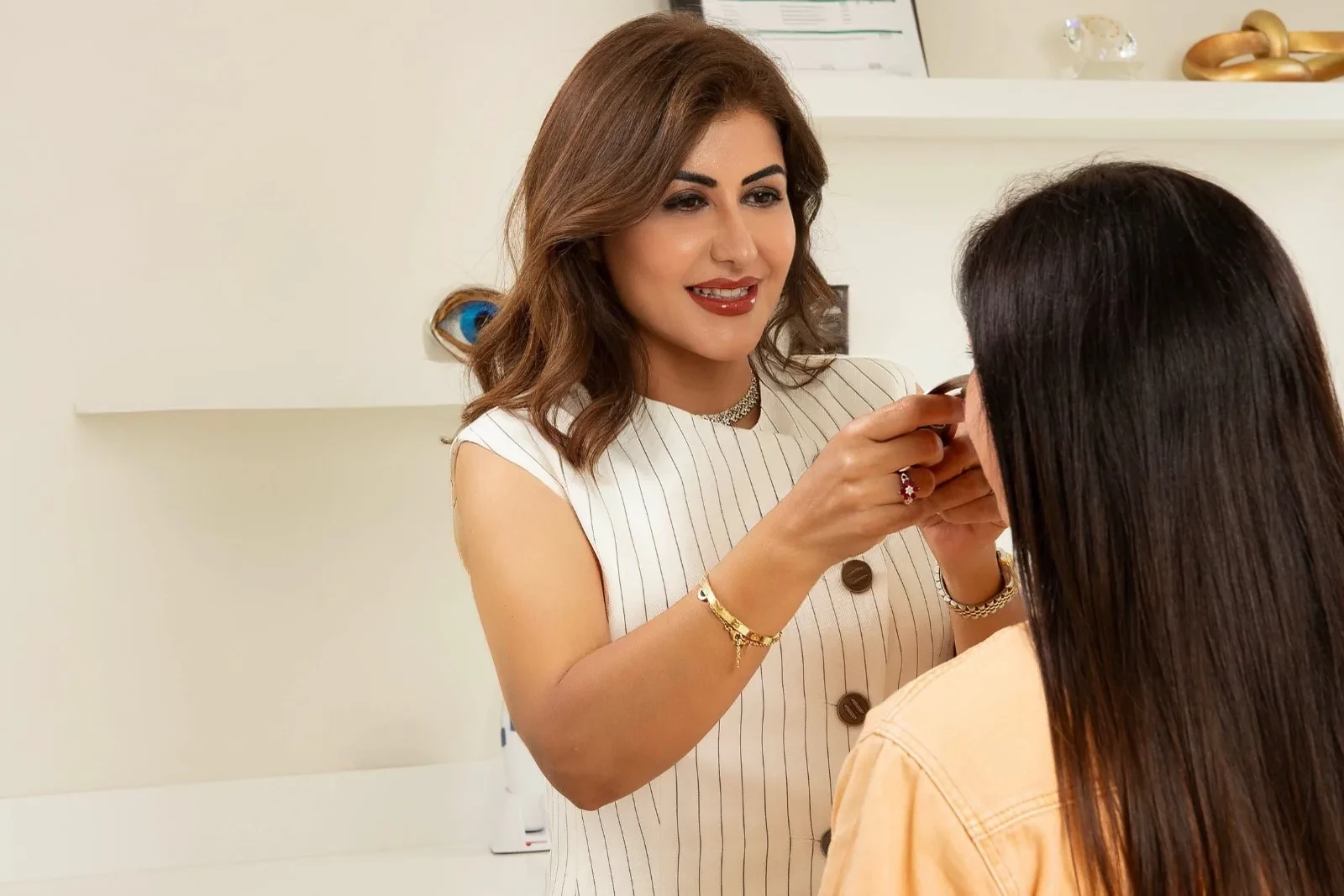
Dr Fatemeh Asadi, MD, FRACGP brings two decades in cosmetic medicine and general practice to every consultation. She is a Key Opinion Leader for Merz Aesthetics and an Official Trainer for Aptos Threads. This reflects her ongoing role in cosmetic medicine education, including attending national and international conferences, training other doctors and nurses, and contributing her clinical knowledge to the wider medical aesthetics community.
Our approach at our Brisbane clinic is careful and honest. We look at what is really driving the change. It might be loss of fat or volume in the temple, change in the bone underneath, thinning of the soft tissue, or a mix of these. We also look at whether any treatment is genuinely right for you. The temple sits close to important blood vessels and to the temporal branch of the facial nerve, so this area is always assessed with real care, and only treated when there is a clear reason to.
Areas Commonly
Assessed
A hollow temple assessment at our Newstead clinic in Brisbane looks at a few different things: how you're built, age-related change, fat loss from weight change, and how the temple is affecting the rest of the upper face. Most people have more than one of these going on.
Temple Volume
& Lateral Contour
Temple volume shapes how the upper face looks, both from the front and side-on. A well-supported temple gives a smooth line from brow to cheekbone. A hollow one creates a dip that catches the eye and can make the face look tired or gaunt. We look at how deep the hollow is, the shape of the bone underneath, and how the temple relates to the outer brow and upper cheek.
Underlying
Bone Shape
The temporal bone is the scaffold under the temple. As it thins with age, the curved ridge along the side of the skull (the temporal crest) becomes easier to see. We look at how prominent that ridge is, and whether your bone shape gives you a naturally deeper temple.
Temple
Symmetry
A small difference between the two temples is very common, and often goes unnoticed until volume change makes it stand out. We assess each side on its own before talking through any plan.
Temporal
Fat Pad Pattern
The temple fat pad sits between two thin layers of tissue and thins unevenly with age: the upper part shrinks while the lower part can thicken. We look at that pattern, so any plan addresses the right area rather than just the surface.
Weight Loss
& Medication Effects
Big weight loss, including weight loss from medication, is often one of the first things to show up as hollow temples. The temple fat pad is very sensitive to losing weight, and fast loss can leave a noticeable dip that doesn't always fill back out once your weight settles. We take your weight history into account alongside how the temples look now.
Lateral Brow
& Upper Eye
Temple volume helps hold up the outer brow. When the temple hollows, the brow can look like it's dropping and the upper lid can look heavier, even when neither has really changed. We assess this together with the temple.
The side of the face reads hollower than it feels to the touch. What reads as a shadow at the temple is usually three layers thinning together: the temporal bone losing density, the temporalis muscle reducing in bulk, and the fat pad beneath the skin deflating. A good consultation reads each separately, and is honest about the vascular anatomy in this zone and what a safe, considered approach requires.Dr Fatemeh Asadi MD, FRACGP · GP & Cosmetic Physician
Your Consultation
in Brisbane
Your consultation at our Brisbane clinic starts with a conversation about your concerns and what you would like to achieve. We review your medical history, carefully assess the temple and upper face, and use VISIA skin analysis where appropriate to gain a better understanding of your skin's condition. We then explain our findings, discuss the treatment options that may be suitable for you, and answer your questions so you have a clear understanding of the benefits, possible risks, and alternatives before deciding whether to proceed. Risks & Complications →
Listening
Assessment
Options
Treatments We
May Discuss
The treatments listed here are examples of what may be considered. They are not a treatment plan and do not mean you will need all of them. Your recommendation may include one option, a combination, or a different approach altogether after your skin has been properly assessed at our Brisbane clinic.
Temple Volume Support
Where the temple has lost depth and the side of the face reads hollow, an in-clinic treatment may be one option we talk through. The temple is one of the trickier areas to work in. The superficial temporal artery and the temporal branch of the facial nerve both run through here, so anything done in this region is placed deep, slowly, and carefully, and only by an experienced doctor. Whether this approach suits you, and exactly how it would be done, is something we only decide together at a full clinical consultation.
Bio-Stimulation
Sometimes the hollowing isn't just a single dip in volume. It's a broader thinning of the skin and soft tissue right across the temple. Where that's the case, we may talk through an in-clinic treatment given as a short series over time. Whether it's right for your skin, and how it would be spaced, is worked out at a full clinical consultation.
Aptos Thread Lifts
Where your assessment shows a dropped outer brow or softening of the upper cheek alongside the temple change, we may talk through fine threads to support the surrounding tissue. Dr Asadi is an Official Trainer for Aptos Threads.
All cosmetic procedures carry potential risks and side effects. Suitability, contraindications, and the full range of potential complications are discussed at your consultation. Individual results vary; no outcome can be guaranteed. Read about Risks & Complications →
A few questions
before a consultation?
If you'd rather have a chat with our team before booking, you're welcome to call. No pressure, no obligation. Just a conversation.
Frequently
Asked
Often, yes. Addressing temple hollowing without surgery is well established, both for age-related change and for temples that hollow after weight loss. Whether it suits you depends on how deep the hollow is, the shape of the bone underneath, your overall facial proportions, and your medical history. That's worked out at a full consultation.
It's usually a few layers changing at once: the temporal bone slowly losing density, the chewing muscle thinning, the temple fat pads shrinking and shifting, and the fat under the skin reducing. Significant or rapid weight loss often makes it more noticeable. We work out which layers are involved during your consultation.
The temple flows into the outer brow, the upper cheek, and the outer eye area. Supporting the temple thoughtfully can help hold up the outer brow and soften how the surrounding area looks. Whether that's the right approach for you, and how far to take it, depends on your anatomy and is discussed at your consultation. Individual results vary.
How long the effect lasts varies from person to person. It depends on the approach used, your metabolism, weight changes, and lifestyle. We'll talk through what to expect at your consultation, based on the plan that suits you. Individual results vary.
Most people are able to return to their normal day fairly soon, though this depends on the treatment chosen and on you. Some mild swelling, redness, or bruising in the area is common at first and usually settles over the following days. We talk through what to expect, including aftercare and how long to allow, at your consultation and again on the day, so you can plan around it. Individual results vary.
Common reasons people come in are age-related temple hollowing, temple volume loss after a weight change, and an outer brow that has softened or dropped. Whether it's right for you depends on your anatomy, medical history, current medications, and what you're hoping for. That's decided at a consultation.
Every cosmetic procedure carries some risk, including bruising, swelling, asymmetry, infection, problems involving blood vessels, and a result you're not happy with. The specific risks depend on the treatment and are explained in full at your consultation, and again on the day. You'll find more on our Risks & Complications page.

Dr Fatemeh Asadi MD, FRACGP
GP & Cosmetic Physician · Founder, Body Dezign House
Ready for a
Consultation or Treatment?
Book a time with Dr Asadi or her team at our Newstead clinic in Brisbane. New here? Begin with a consultation. Already consulted, or following a treatment plan you've discussed? Book your next session, or reach out with any other enquiry.