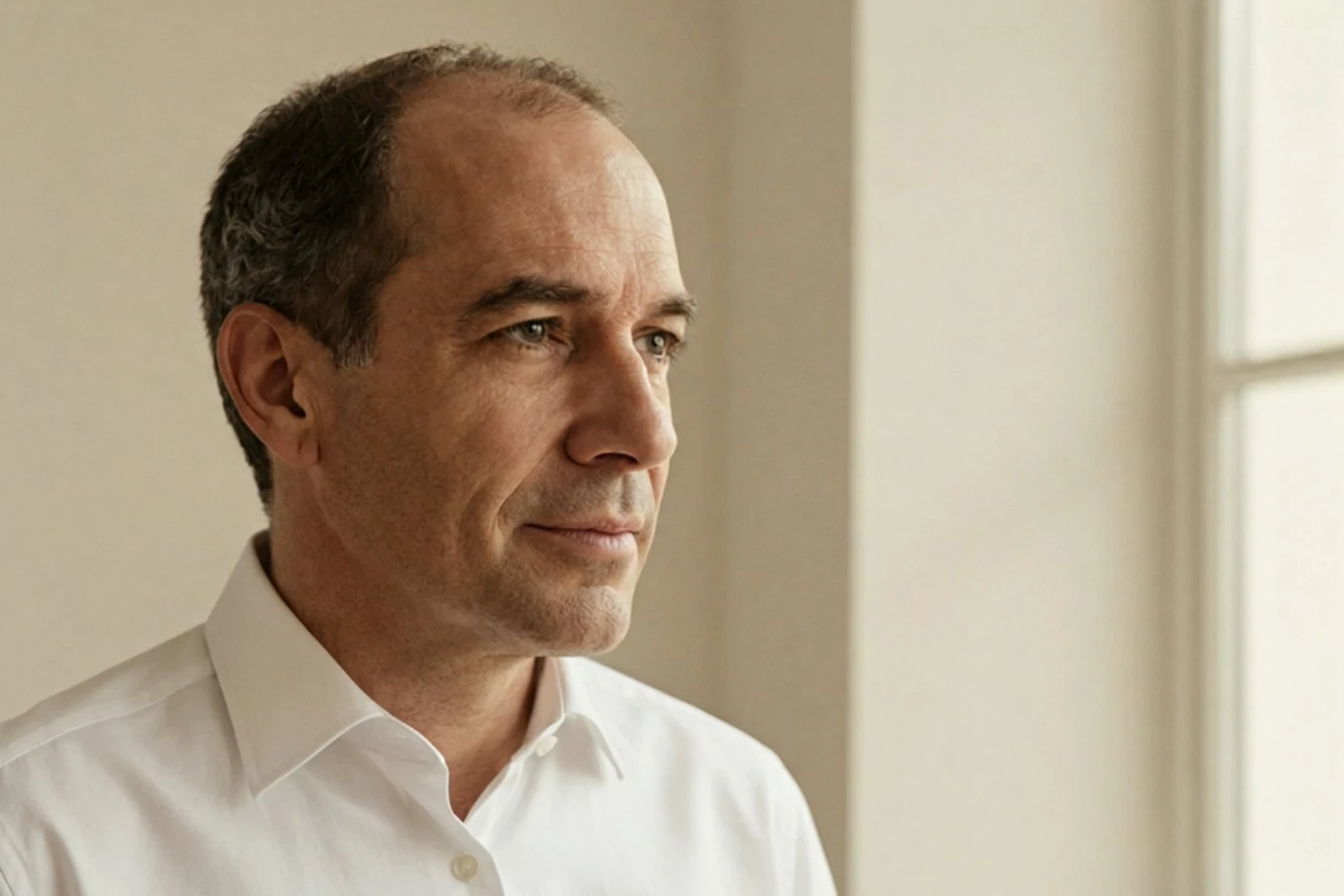
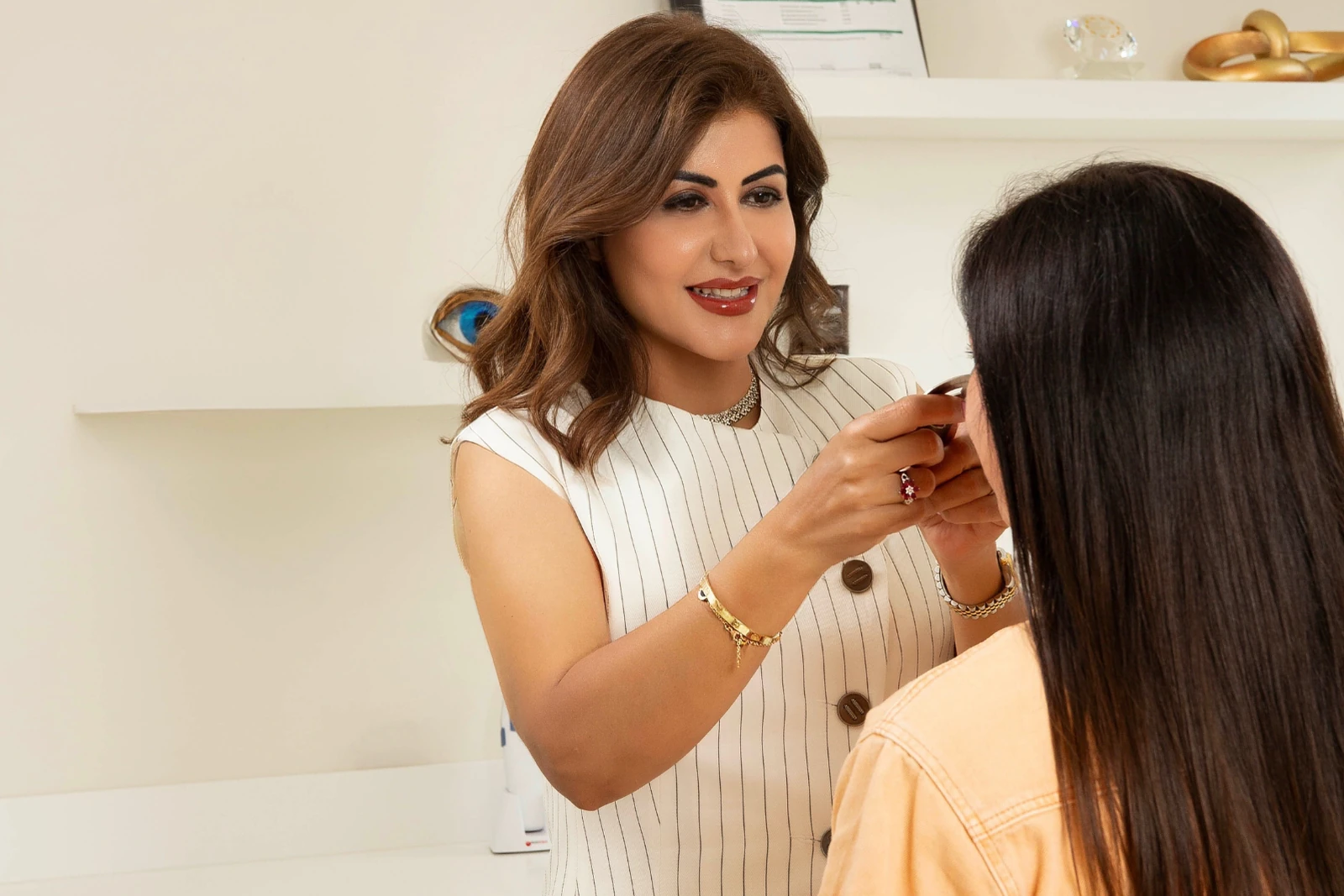
Hair loss is about more than how things look. It is usually the visible end of a longer story between the hair follicle, the small living root in the scalp that grows each hair, and the body that feeds it. Each follicle works through a slow cycle of growing, resting and shedding. The scalp it sits in is a working organ too, with its own blood supply, oil glands and nerves. When the cycle stays steady, the hair looks full and even. When something interrupts it, whether genetics, hormones, stress or your general health, the hair on the surface starts to show it. A careful hair and scalp assessment looks at the follicle and the scalp first, before any treatment is discussed, in the same way we approach cellular ageing of the skin.
Hair loss tends to follow one of two patterns. The first is gradual, and is largely written into your genes and hormones. This is what most people mean by pattern hair loss. In women, the part line often widens slowly across the top of the scalp, the front hairline tends to hold, and the crown loses some of its fullness. In men, the temples usually recede first, the crown begins to thin, and over time the two can meet in the middle. Both come down to the same thing: certain follicles become more sensitive to hormones in the blood, and slowly make finer, shorter, lighter hairs, until the strand is too small to reach the surface. This can start in your twenties or thirties, well before most people expect it.
The second pattern is more sudden, and usually means something has changed for the body as a whole. Heavier shedding two to four months after illness, surgery, childbirth, rapid weight change, low iron or a big life stress is one of the most common reasons people first notice their hair. Thyroid changes, some medications, scalp inflammation and very tight hairstyling can also play a part. This kind of shedding often improves once the cause is found and supported, and many people are reassured to learn it usually settles. Where it sits on top of an existing pattern hair loss, we read each layer separately, so any plan is honest about both.
Male and female hair loss can also feel different, not just look different. For many women, the first sign is not a bald spot but a quiet change at the part line, a looser ponytail, or more hair on the pillow and in the drain. For many men, it is a small shift in the hairline that family or old photos notice first. Both deserve the same careful assessment. A good hair assessment respects how each pattern actually shows up, looks at the scalp underneath, and never works from a single template.
Our Newstead clinic serves clients across Brisbane, including New Farm, Teneriffe, Fortitude Valley, Hamilton, Ascot, and the broader inner north.