
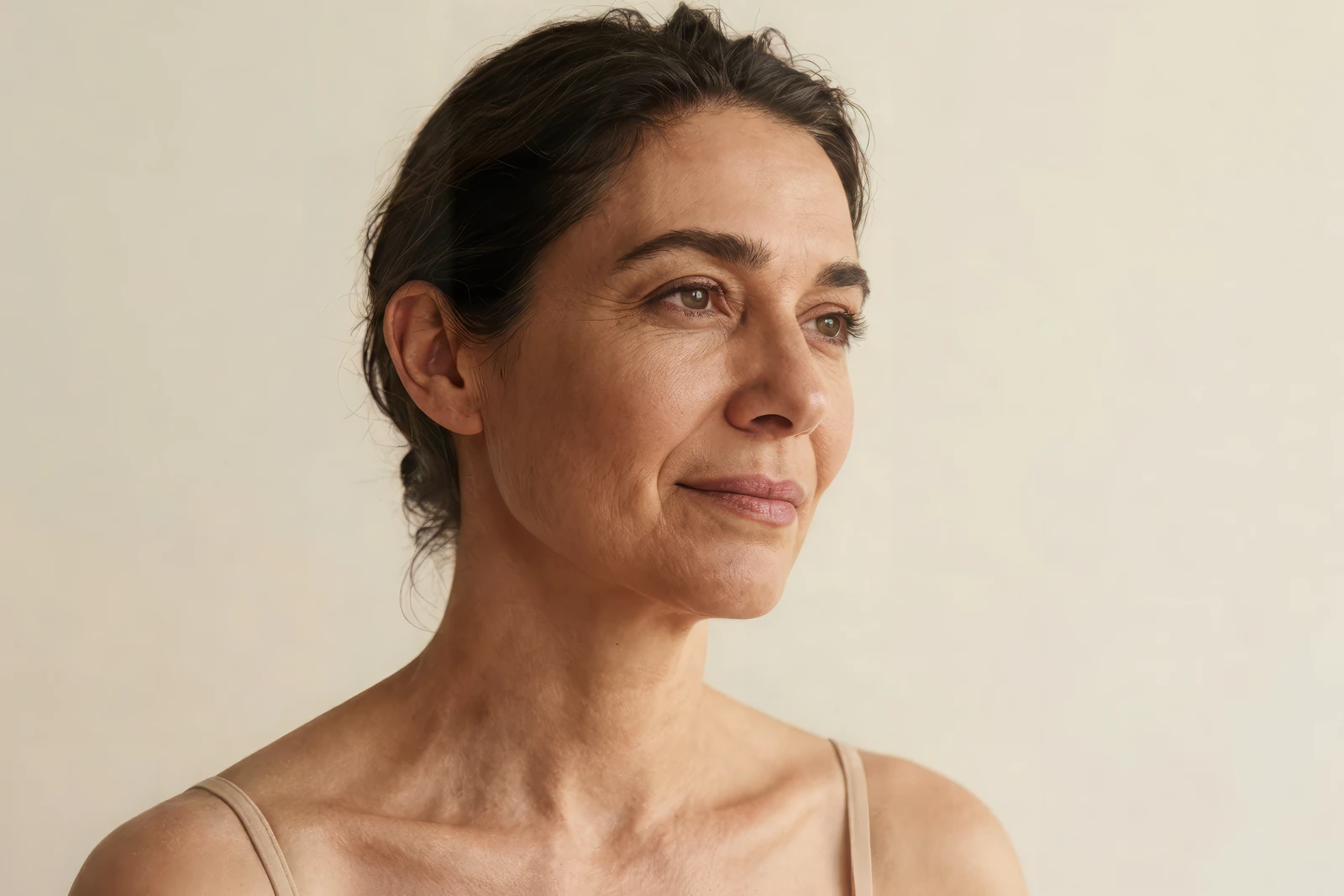
Skin Hydration & Healthy SkinNewstead, Brisbane
Body Dezign House is a doctor-led clinic in Newstead, Brisbane. Your skin holds water in two places, not one. There is the thin outer layer that meets the world, and a deeper layer beneath it (the dermis) that stores water and keeps the surface soft. Every consultation here looks at your skin as a whole, is guided by your skin, and carries no obligation to go ahead.
Skin Hydration
in Brisbane
Your skin is built in layers. The outer layer is your skin barrier, the part you can see and touch. It is made of flattened cells held together by natural fats and oils, and it decides how much water leaves your skin each day. Beneath it sits a deeper layer, the dermis. This is where a natural water-holding gel keeps the skin plump and gives it a soft bounce. When patients describe dehydration, they are usually noticing changes in both layers. The difference matters, because the barrier and the dermis each respond to different things. Patients dealing with collagen loss often notice hydration changes at the same time, because the same deeper layer sits behind both.
Two things shape your hydration. The first is simply how your skin is built. Some people are born with a thinner barrier, less of the protein that helps hold water in, or less natural oil, and their skin loses water more easily. The second is age. Over time, skin renews itself more slowly, the deeper layer holds less water, and natural oil drops, especially in women through perimenopause. Bit by bit, the skin loses some of what used to keep water in place. This is why concerns around signs of cellular ageing and skin hydration almost always travel together.
Men's and women's skin behave differently here. Men's skin is generally thicker and makes more natural oil through life, so it tends to hold surface moisture for longer. Women lose more water from the deeper layer through perimenopause, as oestrogen drops, and this shows in the skin in the years around menopause. The two patterns call for different conversations, and different timing.
Our Newstead clinic serves clients across Brisbane, including New Farm, Teneriffe, Fortitude Valley, Hamilton, Ascot, and the broader inner north.
About Dr AsadiSkin hydration is the easiest concern to oversimplify and the hardest to fix quickly. Patients arrive sure they are dehydrated when really their barrier is damaged, or sure they are oily when their skin is dehydrated underneath. My job is to read the skin properly before suggesting any treatment, because the approach that helps one skin can make another worse. What we do here is layered, slow, and tailored to you.Dr Fatemeh Asadi, MD, FRACGP
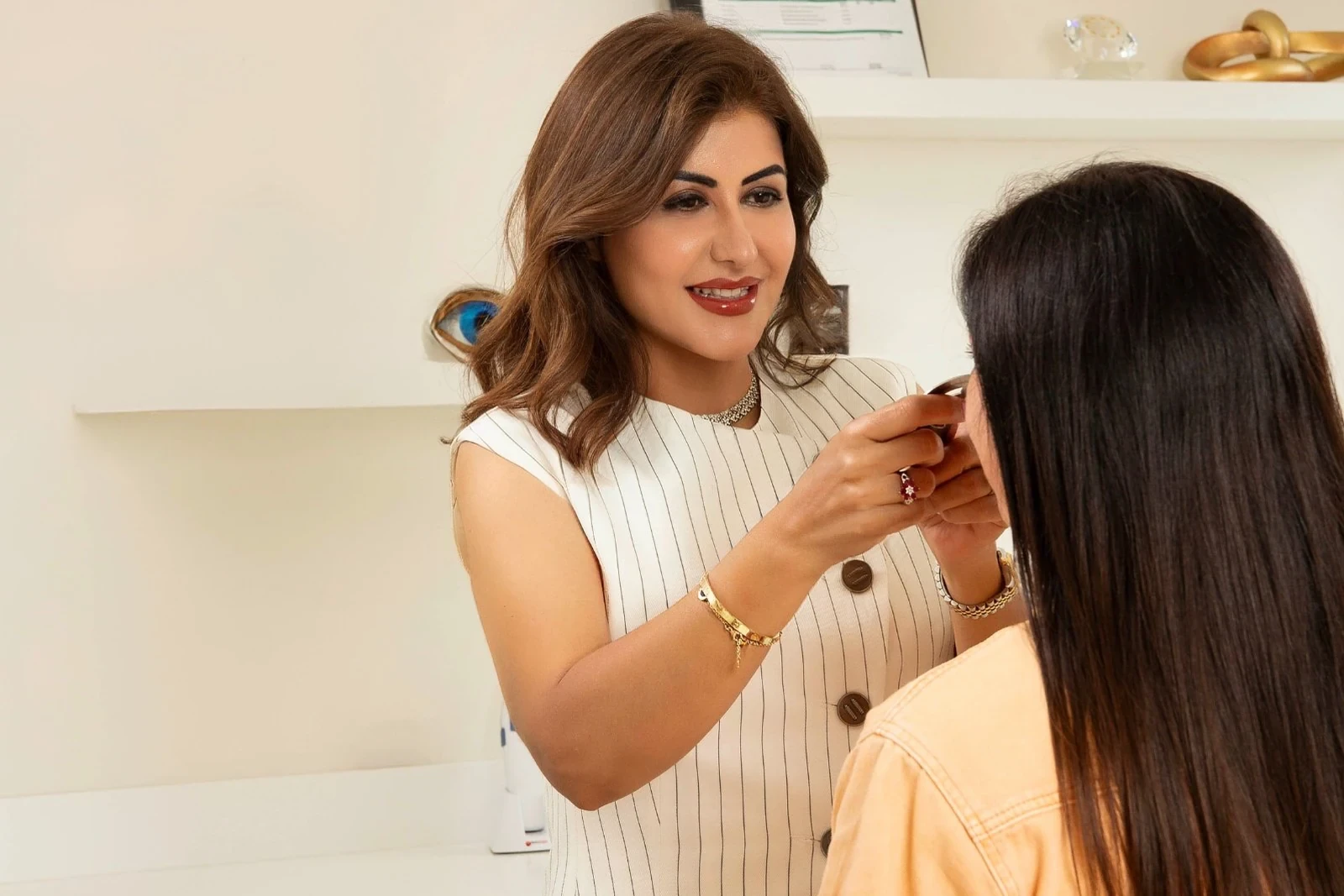
Dr Fatemeh Asadi, MD, FRACGP brings two decades in cosmetic medicine and general practice to every consultation. She is a Key Opinion Leader for Merz Aesthetics and an Official Trainer for Aptos Threads. This reflects her ongoing role in cosmetic medicine education, including attending national and international conferences, training other doctors and nurses, and contributing her clinical knowledge to the wider medical aesthetics community.
At our Newstead Brisbane clinic, our approach to skin hydration starts with what is really going on. We look at how well the barrier is working, how much water the deeper layer holds, and how much natural oil the skin makes. Sometimes related concerns like skin laxity come into it too. We don't treat hydration as one problem with one answer. We read what your skin is doing and where the water is being lost, then talk through options that match what we find. Some skin needs the barrier repaired first. Other skin needs support in the deeper layer, or both together, one step at a time.
Areas Commonly
Assessed
Skin hydration is not one single thing. It shows up across the surface, the deeper layer, and in how your skin behaves through the day. In our Newstead Brisbane clinic, these are the things we look at.
The Surface Barrier
& Natural Oils
The outer layer of your skin is the barrier you can see and touch: flattened cells held together by natural fats and oils. When this layer is healthy, water leaves slowly. When it is worn down by harsh cleansers, too much exfoliating, strong active products, or simply how your skin is built, water escapes faster than your skin can replace it. The state of this layer often explains more about how your skin looks than anything else.
Dermis
Structure
Beneath the surface, the deeper layer (the dermis) holds most of your skin's water in a natural, water-binding gel. This store of water drops steadily with age, earlier and faster than most people realise. When it drops, the surface can still look fine up close, but the skin looks flatter and a little dull, and fine lines settle in more as the day goes on.
Sebum &
Surface Oil
The layer of natural oil on your skin's surface, called sebum, slows water loss and gives skin its soft, supple feel. Sebum drops sharply in women through perimenopause, and more slowly in men. Remember, oily-looking skin can still be dehydrated underneath.
Skin Reactivity
& Redness
How quickly your skin flushes, how easily it stings, and how often it reacts to products it once handled fine, all tell us how strong the barrier is. When the barrier is worn down, skin becomes more reactive. It can look redder and feel more sensitive. This is often the first thing to change and the last to fully settle.
Surface Texture
& Light
Hydration changes how light meets your skin. Well-hydrated skin reflects light evenly. Dehydrated skin looks duller and flatter, and finer lines start to show by the afternoon. VISIA imaging captures these patterns and tracks them from visit to visit, so small changes are not lost to memory. The way your skin looks on the surface is really a sign of what is happening underneath.
Daily &
Seasonal Patterns
Hydration is not the same all the time. Most patients notice it change from morning to afternoon, with the seasons, and after a poor run of sleep. These patterns matter, because they often tell us whether the issue is in the barrier, the deeper layer, or both.
Skin that once felt comfortable all day can gradually become dry, dull, or prone to fine lines. In many cases, this happens because the skin barrier is not holding moisture as well as it used to, while hydration levels deeper within the skin have also declined. A good consultation looks at each separately and helps you understand which concerns may respond to clinic treatments and which may improve with the right homecare.Dr Fatemeh Asadi MD, FRACGP · GP & Cosmetic Physician
Your Consultation
in Brisbane
Your consultation at our Brisbane clinic starts with a conversation about your concerns and what you would like to achieve. We review your medical history, carefully assess your skin barrier and the deeper layer, and use VISIA skin analysis where appropriate to gain a better understanding of your skin's condition. We then explain our findings, discuss the treatment options that may be suitable for you, and answer your questions so you have a clear understanding of the benefits, possible risks, and alternatives before deciding whether to proceed. Risks & Complications →
Listening
We start by listening to your skin's story: what it has felt like, how it has changed, what products have helped, and what has irritated it. We ask about how you cleanse, your sun exposure, your stage of life, sleep, smoking, any recent strong products or peels, and any medicines that affect how moist your skin is. As part of good practice, your clinician also gently asks how you feel about your appearance, so that anything we discuss is truly in your interest.
Assessment
Your clinician looks closely at your skin under bright light and with specialised imaging. Our reading is supported by VISIA, the latest AI-driven skin imaging, which picks up patterns in surface texture, what is happening below the surface, and redness that the eye alone can miss. We look at three things. First, the barrier: how sensitive, reactive, or red it is. Second, the deeper layer: how plump it is and how fine lines sit. And third, the natural oil: how balanced it is and how the skin feels. Two people with the same complaint can have very different things going on underneath, and the assessment is what shows us which. You see what we see.
Options
After the assessment, your clinician talks you through the options that suit your skin. For most hydration concerns, this means working in layers, one step at a time rather than all at once. We repair the barrier, support the deeper layer, and gently treat anything that is adding to the problem, such as rosacea and facial redness. Some patients leave with a change to their homecare and no clinic treatment at all. If the bigger issue is really about structure or sagging, the honest answer may be a referral for a surgical opinion. And choosing not to go ahead is always a fair choice, respected without any pressure.
Treatments We
May Discuss
The treatments listed here are examples of what may be considered. They are not a treatment plan and do not mean you will need all of them. Your recommendation may include one option, a combination, or a different approach altogether after your skin has been properly assessed at our Brisbane clinic.
Skin Booster
A clinic treatment that supports hydration deeper in the skin, working with your skin's own water-holding biology. We talk about it as a way to support skin quality, not to add volume. Discussed in detail at your consultation.
Rejuran
Rejuran works in the deeper layer of the skin to support repair and skin quality. It works in a different way to volume-based approaches. Discussed in detail at your consultation in our Newstead Brisbane clinic.
Skin Needling
A device-based treatment, sometimes called microneedling, that makes tiny controlled channels in the skin to switch on its own repair response. Over the following weeks, this supports collagen and helps the surface renew. Considered as part of a layered hydration plan where it suits you.
Signature Facial
An in-clinic facial matched to the current state of your skin barrier. We use it for upkeep, gentle support, and to look after the skin between deeper treatments. It suits skin where the barrier is the main thing to work on.
PRP
PRP (platelet-rich plasma) is prepared from a small sample of your own blood and used to support the quality of the skin. We usually discuss it as part of a layered plan rather than a one-off. Whether it suits you is decided at your consultation.
Collagen Stimulation Treatment
A planned, structured sequence that works with your skin's own collagen, matched to the state of your skin and the layers that need support. Discussed and planned at your consultation.
Universkin Le Sérum Hyaluronique
A hyaluronic serum we stock, for skin that looks and feels dehydrated.
Biopelle Tensage® Advanced Cream Moisturiser SCA 6 Biorepair Index
A richer moisturiser we stock, often discussed for drier skin.
Dermaceutic Hyal Ceutic Intense Hydrating Cream
An intense hydrating cream we stock, for skin that looks and feels dehydrated.
ZO Skin Health Hydrating Creme
A recovery-style creme we stock, for skin that looks and feels dry.
All cosmetic procedures carry some risk and possible side effects. Whether a treatment suits you, what might rule it out, and the full range of possible complications are all discussed at your consultation. Individual results vary, and no outcome can be guaranteed. Read about Risks & Complications →
A few questions
before a consultation?
If you would rather talk to our team before booking, we are happy to take a thoughtful phone call. No pressure, no obligation. Just a conversation.
Frequently
Asked
Dry skin is a skin type. It lacks oil because the skin makes less natural oil, and most people are born with it. Dehydrated skin is a condition. It lacks water, and it can affect any skin type, even oily skin. The two need different help: dry skin needs richer, oil-based products, while dehydrated skin needs water-attracting ingredients and a healthy barrier to hold that water in. Many people have a bit of both, and the assessment is what tells them apart.
A few things work together. The outer barrier gets less good at holding water in. Skin renews itself more slowly. The deeper layer holds less water as the years go by. Hormones matter too: oestrogen helps the deeper layer stay hydrated, so women often notice the change speed up through perimenopause as oestrogen drops. The environment plays a part as well. Dry air, air-conditioning, hot showers, too much exfoliating, harsh cleansers, and years of sun all pull water out of the skin. How much each one matters is different for every person.
Yes, and it is more common than most people think. Oil and water are not the same thing. Oily skin makes plenty of oil but can still be short of water in the layers underneath. Sometimes being dehydrated even drives the oil up: when the barrier loses water, the skin makes more oil to make up for it. That is why skin can look shiny on top while feeling tight, dull, and prone to fine lines underneath. Treating it as simply oily skin, with harsher cleansers and more scrubbing, usually makes the dehydration worse.
Yes, but not as directly as most people assume. The water you drink supports your whole body, including the deeper layers under the skin, and not drinking enough does show up over time. But the outer layer of your skin holds water through its own oils and natural moisturisers, not through what you drink. So someone who drinks plenty of water but has a worn-down barrier from over-exfoliating can still have dehydrated skin. Both things matter together.
It depends on the treatment and on the person. Some clinic treatments support the skin for several months between sessions. Others build up over a series, so the benefit grows over time. Your homecare and daily habits, like sleep, sun protection, and how you cleanse, matter as much as any single treatment. We talk through how long to expect as part of your own plan at your consultation in our Newstead Brisbane clinic. Individual results vary.
Sometimes homecare is enough on its own, especially when the problem is a worn-down barrier from over-cleansing, over-exfoliating, or strong active products. Easing off the harsh products, settling into a gentler routine, supporting the barrier with a good moisturiser, and protecting from the sun can often bring the surface back without any clinic treatment. When the problem sits deeper, or there are several things going on at once, homecare is usually one part of a layered plan rather than the whole answer. This is something we work out together at your consultation, in person. Individual results vary.
All cosmetic procedures carry some risk. These can include bruising, swelling, unevenness, infection, problems with blood vessels, and a result you are not happy with. The exact risks depend on the treatment, and we explain them in full at your consultation and again on the day. You can read more on our Risks & Complications page. Individual results vary.

Dr Fatemeh Asadi MD, FRACGP
GP & Cosmetic Physician · Founder, Body Dezign House
Dr Asadi and our team share an approach that is led by your skin and never rushed. Every consultation looks at your skin as a whole before any treatment is discussed. That includes the barrier at the surface, the deeper layer that holds water, and the natural oil that keeps the skin comfortable, alongside your history, how your skin behaves, and your goals. If an option is not the right tool, we will say so plainly. We will talk through what may suit you better, including a referral when that is the wiser path.
Dr Fatemeh Asadi, MD, FRACGP, draws on two decades in cosmetic medicine and general practice in every consultation. She is a Key Opinion Leader for Merz Aesthetics and an Official Trainer for Aptos Threads, and she remains active in cosmetic medicine education, presenting at national and international conferences, teaching other doctors and nurses, and sharing her clinical experience with the wider medical aesthetics community.
Ready for a
Consultation or Treatment?
Book a time with Dr Asadi or her team at our Newstead clinic in Brisbane. New here? Begin with a consultation. Already consulted, or following a treatment plan you've discussed? Book your next session, or reach out with any other enquiry.