
This page explains PRP (platelet-rich plasma) treatment at Body Dezign House in Newstead, Brisbane. PRP is prepared from a small sample of your own blood, concentrated in a centrifuge, and returned to the face, under-eyes, neck, decolletage, hands, or scalp to support skin quality, texture, and early-to-moderate hair thinning. Every PRP consultation is anatomy-guided, takes in your whole skin or scalp picture, and carries no obligation to proceed. The Newstead clinic serves clients across Brisbane, including New Farm, Teneriffe, Fortitude Valley, Hamilton, and Ascot. Individual results vary.
Reviewed by Dr Fatemeh Asadi, MD, FRACGP, GP & Cosmetic Physician and founder of Body Dezign House in Newstead, Brisbane. Two decades in cosmetic medicine and general practice. AHPRA registration MED0000975343.
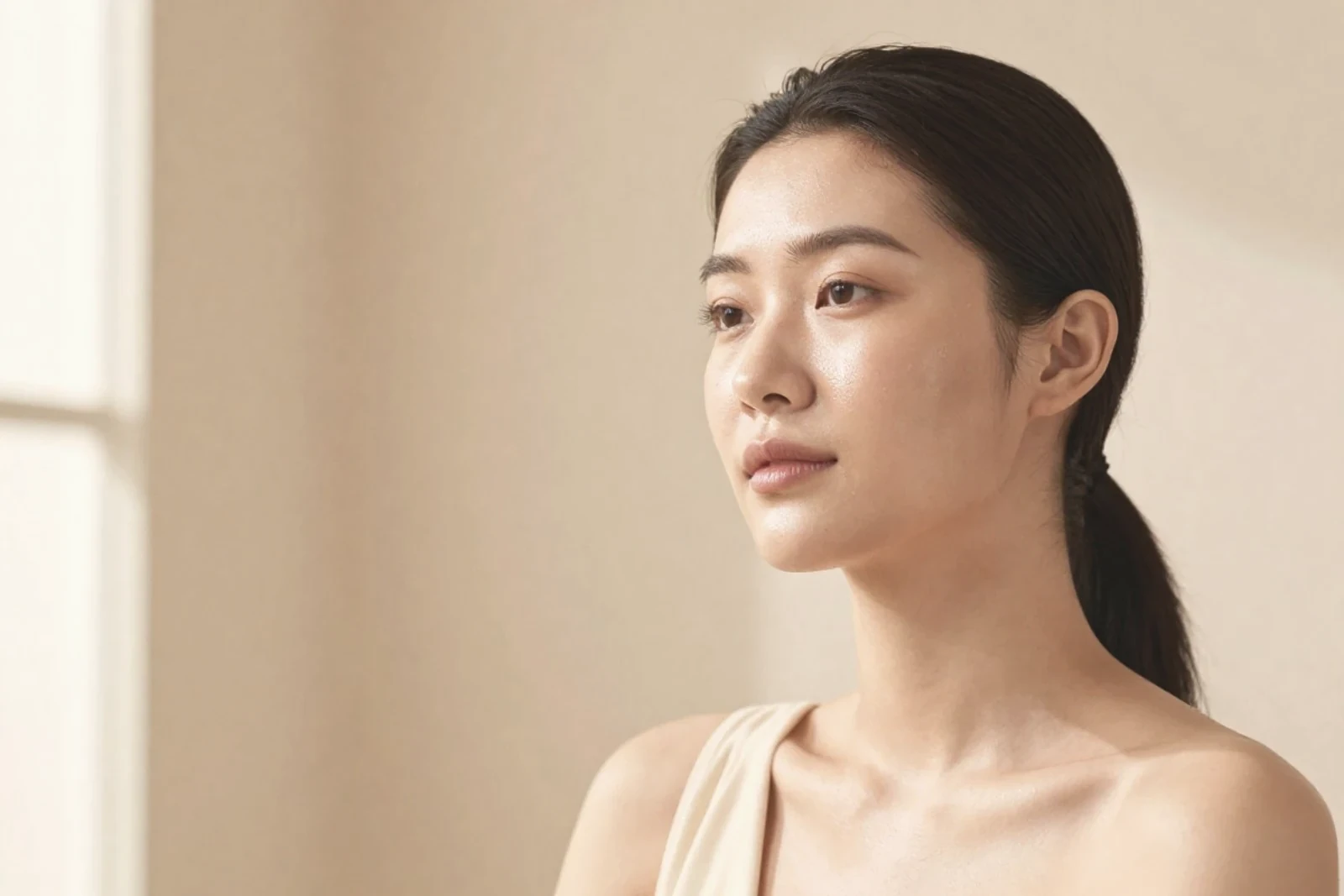
PRP for Face, Neck, Under-Eyes & HairNewstead, Brisbane
PRP is a treatment we make from your own blood. We take a small amount, spin it in a centrifuge to concentrate the platelets and the growth factors they release, and return it to the area we are treating. Because it is your own blood, an allergic reaction or rejection is not possible. The same idea helps with four very different things: the quality of the skin across the face, the thin skin under the eyes, the crepey skin of the neck and décolletage, and early-to-moderate pattern hair thinning. Body Dezign House is a doctor-led clinic in Newstead, Brisbane. Every PRP consultation here is guided by your anatomy, takes in your whole skin or scalp picture, and comes with no obligation to go ahead.
PRP is one of the few treatments where the active ingredient is the patient. It is your own platelets, prepared the same day, returned to the area that needs them. That changes the conversation: not which product to use, but where to place it, at what depth, in combination with which device, and how often to repeat it so the work compounds.Dr Fatemeh Asadi, MD, FRACGP
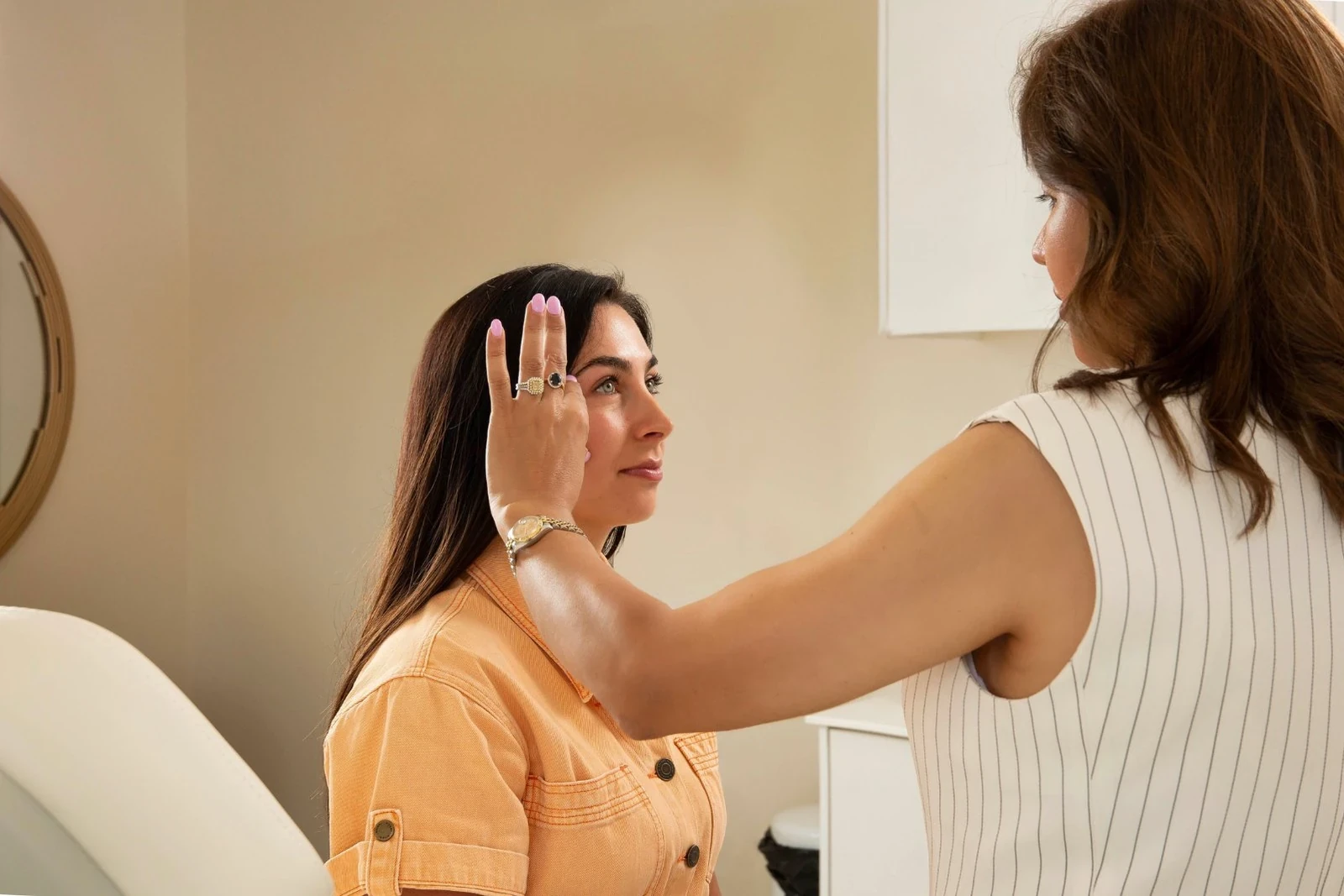
Dr Fatemeh Asadi, MD, FRACGP brings two decades in cosmetic medicine and general practice to every consultation. She is a Key Opinion Leader for Merz Aesthetics and an Official Trainer for Aptos Threads. This reflects her ongoing role in cosmetic medicine education, including attending national and international conferences, training other doctors and nurses, and contributing her clinical knowledge to the wider medical aesthetics community.
Our approach is careful and honest. We look at what is really driving your concern. It might be the quality and texture of the skin across the face, thinning skin under the eyes, crepey skin on the neck and décolletage, early-to-moderate hair thinning, or a mix of these. We also look at whether any treatment is genuinely right for you.
Areas of the Body
Most Commonly Assessed
PRP doesn't do everything. It does a handful of things very well. The technique shifts with the area: microinjections, microneedling, a scalp grid, or paired with a device. Which one suits you, and whether PRP is even right for you, is decided at a consultation.
Face
Skin Rejuvenation
The most common reason people come for PRP. We apply it across the face during a microneedling pass, so the thousands of tiny channels let the growth factors reach the dermis, the deeper layer of skin where new collagen forms. Over a course of three sessions four weeks apart, the skin's texture, fine lines, and overall quality lift gradually. The change builds over two to three months as new collagen and elastin come through, and keeps improving over the following months. It suits people who want a regenerative approach without changing the volume of the face, including those who would rather not consider other treatments.
Under-Eyes
Tear Trough & Hollowness
The skin beneath the eye is the thinnest on the body. It is where ageing, dehydration, and crepiness tend to show first. We place PRP through fine microinjections across the tear trough and the surrounding under-eye area. The aim is to improve the quality of the skin over the bony rim of the eye and to soften the look of hollowness. PRP is not the right answer for every under-eye concern. In some people, hollowness that is more structural is better assessed for a different approach. We decide that at a consultation. See our Under-Eye Concerns page for the full picture PRP fits into.
Neck
& Décolletage
Thinner skin, fewer oil glands, and slower repair. PRP with microneedling across the area helps with crepiness, fine lines, and overall skin quality. We treat the hands the same way.
Hair Thinning
Restoration
PRP has its strongest hair evidence in androgenic alopecia, the most common pattern of hair thinning in men and women. We deliver PRP into the scalp in a grid pattern across the thinning area. The growth factors lengthen the hair's growth phase and support follicles that are thinning but not yet dormant. It works best in early-to-moderate thinning, where there are still living follicles to work with. We often use it alongside another hair-loss treatment arranged through your GP. Established hair loss and scarring patterns, such as alopecia areata or scarring alopecia, are best assessed by a dermatologist.
Combinations
with Devices
Where PRP does some of its best work. Standard microneedling with PRP is the most common pairing on the menu, and the technique behind most facial PRP results. The microneedling makes the channels, and the PRP rides in with them. Pairing PRP with Morpheus 8 or Vivace RF microneedling goes deeper: the radiofrequency heats the skin where collagen is built, and the PRP adds growth factors at the same depth. This suits indented (atrophic) acne scarring, sun damage that needs work at the surface and underneath, and skin of colour, where ablative laser is often not the right choice. A Healite II LED finish at the end of any of these sessions calms the redness that needling can cause and shortens the visible recovery. Which combination fits is decided at a consultation.
When PRP
Is Not Right
An active skin infection on the area, some blood disorders, certain blood-thinning medicines, a low platelet count, pregnancy, and very advanced hair loss where the follicles are gone. In each case the right answer is to assess first, not to treat.
PRP is not about adding something artificial to the skin. It works by using your body's own natural healing and repair processes to support skin quality, collagen production, and hair health. My approach is to understand your concerns, assess whether PRP is suitable for your goals, and create a treatment plan based on realistic expectations and evidence-based care.Dr Fatemeh Asadi MD, FRACGP · GP & Cosmetic Physician
Your Consultation
in Brisbane
Your consultation at our Brisbane clinic starts with a conversation about your concerns and what you would like to achieve. We review your medical history, carefully assess the area you would like us to treat, and use VISIA skin analysis where appropriate to gain a better understanding of your skin's condition. We then explain our findings, discuss the treatment options that may be suitable for you, and answer your questions so you have a clear understanding of the benefits, possible risks, and alternatives before deciding whether to proceed. Risks & Complications →
Listening
Assessment
Options
Treatments We
May Discuss
The treatments listed here are examples of what may be considered. They are not a treatment plan and do not mean you will need all of them. Your recommendation may include one option, a combination, or a different approach altogether after your skin has been properly assessed at our Brisbane clinic.
PRP via Microneedling for Facial Rejuvenation
The most common facial PRP technique. After we take your blood and prepare the PRP, we make a microneedling pass across the face. This creates thousands of tiny channels in the skin, and we apply the PRP at the same time so it travels deeper than skincare on the surface can. The growth factors reach the dermis, the deeper layer of skin where new collagen and elastin form. A session takes about 60 to 75 minutes, including the blood draw, the PRP preparation, and time for the numbing cream. Your skin looks pink and feels warm for a few hours and is usually presentable the next day. A standard course is three sessions four weeks apart, with maintenance every six to twelve months. It suits people who want a regenerative result without changing the volume of the face. It is also a gentler option for darker skin, where some other resurfacing choices carry a higher risk of darkening after inflammation.
PRP for the Tear Trough & Under-Eye Skin Quality
The skin beneath the eye is the thinnest on the body, which is why crepiness, darkness, and dryness show there first. We place PRP through fine microinjections across the tear trough and the surrounding under-eye area. The aim is to improve the quality of the skin over the area and to soften the look of hollowness. Bruising is more common here than elsewhere, because the skin is thin and has more blood vessels, so most people plan a treatment for an evening or a quiet week. PRP is not the right answer for every under-eye concern. Some hollowness is more structural and is better assessed another way, and some people do better with a combined plan. See our Under-Eye Concerns page for the wider picture.
PRP via Microneedling for Neck, Décolletage & Hands
These three areas (neck, décolletage, backs of the hands) share the same skin: thinner than the face, fewer oil glands, slower repair, and more sun damage built up over the years. PRP with microneedling across the area helps with crepiness, fine lines, and overall skin quality in one go. The technique is the same as the facial one, scaled to the area. A course of three sessions four weeks apart, with maintenance every six to twelve months, is the usual rhythm. We often treat the chest and the backs of the hands alongside the face in the same person.
PRP for Androgenic Alopecia (Pattern Hair Thinning)
PRP has its strongest hair evidence in androgenic alopecia, the most common pattern of hair thinning in men and women. After the blood draw and PRP preparation, we gently numb the scalp and deliver PRP into it in a grid pattern across the thinning area. The growth factors lengthen the hair's growth phase and support follicles that are thinning but not yet dormant. It works best in early-to-moderate thinning, where there are still living follicles to work with; it cannot regrow hair where the follicles are gone. The course is more involved than the facial one: three to four sessions four weeks apart, then maintenance every three to six months while the growth phase is being supported. We often use PRP alongside another hair-loss treatment arranged through your GP. Where the right next step is a surgical hair transplant (FUE or FUT), or the pattern points to alopecia areata, scarring alopecia, or another medical cause, we refer you to a dermatologist or hair restoration specialist.
PRP + Microneedling (Same Session)
The standard facial PRP technique. Standard microneedling makes thousands of tiny channels in the skin, and PRP applied at the same time travels through those channels into the deeper layer. We use it across the face, neck, décolletage, and hands. Recovery is short: pink, warm skin for a few hours, makeup the next day. A course of three sessions four weeks apart is the usual rhythm.
PRP + Morpheus 8 (Same Session)
A deeper combination. Morpheus 8 is a radiofrequency microneedling device. It sends RF energy through gold-coated microneedling channels into the deeper layers of the skin and stimulates new collagen at depth. Adding PRP to the same session combines that deep heating with the regenerative growth factors of PRP. It suits indented (atrophic) acne scarring, settled texture change, and darker skin, where ablative laser carries a higher risk of darkening the skin. Downtime is moderate: two to four days of pinkness and tiny pinpoint marks. A standard course is three to six sessions, four to six weeks apart, with the collagen continuing to build for six to twelve months after the last session.
PRP + Vivace RF Microneedling (Same Session)
A second RF microneedling device. It uses 36 gold-plated channels with precise depth control and pulsed RF, designed to ease the heat discomfort. Paired with PRP, it works the same way as the Morpheus 8 combination: deep heating plus regenerative growth factors in the same session. The choice between Morpheus 8 and Vivace comes down to your concern, your skin type, and your clinician's judgement on the day. Both treat the same set of concerns; some scar patterns and some skins simply respond better to one device than the other.
PRP + Healite II LED (Recovery Add-On)
A Healite II LED finish at the end of a PRP session is one of the simplest add-ons and one of the most useful. The near-infrared and yellow light calm the redness that any microneedling or RF treatment can cause, support the skin as it recovers, and shorten the visible downtime. There is no heat involved, so it does not upset freshly treated skin. We often add it as a matter of course after Morpheus 8 PRP sessions, and as a single calming session if redness lingers after a course.
All cosmetic procedures carry some risk and possible side effects. Whether a treatment suits you, what might rule it out, and the full range of possible complications are all discussed at your consultation. Individual results vary, and no outcome can be guaranteed. Read about Risks & Complications →
A few questions
before a consultation?
If you would rather talk to our team before booking, we are happy to take a thoughtful phone call. No pressure, no obligation. Just a conversation.
Frequently
Asked
PRP stands for platelet-rich plasma. We make it from your own blood, prepared in clinic to concentrate the platelets that drive your body's natural healing. We take a small amount of blood, the same as a routine blood test, from a vein in your arm, put it into a special tube, and spin it in a centrifuge for about ten minutes. The spin separates the heavier red blood cells from a thin top layer of straw-coloured plasma. That plasma is rich in platelets and the growth factors they release, and it is the active part of PRP. Because PRP is made entirely from your own blood (what doctors call autologous), an allergic reaction or rejection is not possible. That is one of the main reasons it has earned a place in skin rejuvenation, under-eye work, and hair restoration over the past decade.
The evidence is strongest in three areas: skin rejuvenation (texture, fine lines, and overall skin quality), androgenic alopecia (the most common pattern of hair thinning in men and women), and as a healing boost after microneedling and certain laser treatments. The change is gradual rather than dramatic. Most people notice it two to three months after a first course, as new collagen and growth-factor activity show in the skin. PRP is not a substitute for a deep resurfacing treatment, or for surgery in advanced hair loss. It is a regenerative layer in a longer plan. Whether it suits you is decided at a consultation, not online. Individual results vary.
Most people find PRP comfortable. We put a numbing cream on the area for about twenty to thirty minutes before we start, and the blood draw feels like any routine blood test. The area can feel warm and look pink for a few hours afterwards. Bruising is more common in areas with more blood vessels (under the eyes, the lips, the edge of the scalp) and usually settles within four to seven days. For face and scalp treatments there is usually no strict downtime, and most people go back to work the next day. We usually suggest avoiding hard exercise, alcohol, sun, and saunas for the first twenty-four to forty-eight hours.
For most skin and under-eye work, the usual plan is a course of three sessions four weeks apart, with maintenance every six to twelve months. For hair, the plan is more involved: three to four sessions four weeks apart, then maintenance every three to six months while the growth phase is being supported. Results build across the course rather than peaking after one session. How many sessions you need, and how often, is decided at a consultation, based on what we are treating, your skin or scalp picture, and how you respond to the early sessions. Individual results vary.
Yes, and the combinations are where PRP often does its best work. PRP with microneedling is the most common pairing: we make thousands of tiny channels in the skin and apply PRP at the same time, so it travels deeper than skincare on the surface can. PRP with Morpheus 8 or Vivace RF microneedling combines the deep collagen-building effect of radiofrequency with the growth factors of PRP in the same session. That suits acne scarring and skin texture that needs work at both the surface and underneath. The choice between plain microneedling, RF microneedling, and the right depth is decided at a consultation, based on your concern, your skin type, and how much downtime you can give it.
PRP has its strongest hair evidence in androgenic alopecia (male and female pattern hair thinning). It is used to lengthen the hair's growth phase and build density in follicles that are thinning but not yet dormant. It works best in early-to-moderate thinning, where there are still living follicles to work with; it cannot regrow hair where the follicles are gone. The plan is PRP into the scalp in a grid pattern, a first course of three to four sessions four weeks apart, then maintenance every three to six months. We often use it alongside another hair-loss treatment arranged through your GP. Where the right next step is a surgical hair transplant (FUE or FUT), or the pattern points to alopecia areata or scarring alopecia, we refer you to a dermatologist or hair restoration specialist. Individual results vary.
Because PRP is made from your own blood, an allergic reaction or rejection is not a risk. The most common effects are mild and pass quickly: bruising, swelling, redness, and tenderness at the treated area, usually settling within a few days. Some people feel lightheaded during the blood draw, the same as with a routine blood test. Less common risks include bleeding and infection at the site, which is why we work under sterile conditions. After a scalp treatment, a short-lived headache or scalp tenderness can follow. As with any treatment, PRP may not give the result you hoped for. We explain the risks that apply to your treatment in full at your consultation, and again on the day. Full information is on our Risks & Complications page. Individual results vary.

Dr Fatemeh Asadi MD, FRACGP
GP & Cosmetic Physician · Founder, Body Dezign House
Ready for a
Consultation or Treatment?
Book a time with Dr Asadi or her team at our Newstead clinic in Brisbane. New here? Begin with a consultation. Already consulted, or following a treatment plan you've discussed? Book your next session, or reach out with any other enquiry.