
Body Dezign House is a cosmetic medicine clinic in Newstead, Brisbane, offering assessment of pigmentation, sun damage, dark spots, melasma and uneven skin tone that is guided by your anatomy. Every consultation is anatomy-guided and carries no obligation to proceed. Led by Dr Fatemeh Asadi, MD, FRACGP, GP & Cosmetic Physician, with two decades in cosmetic medicine and general practice (AHPRA MED0000975343). Skin-focused options discussed may include CoolView Laser, Lumecca IPL, Clear & Brilliant, PRX-Plus, skin peels and skin needling. Individual results vary.
Dr Fatemeh Asadi, MD, FRACGP, GP & Cosmetic Physician, AHPRA MED0000975343, Newstead, Brisbane.
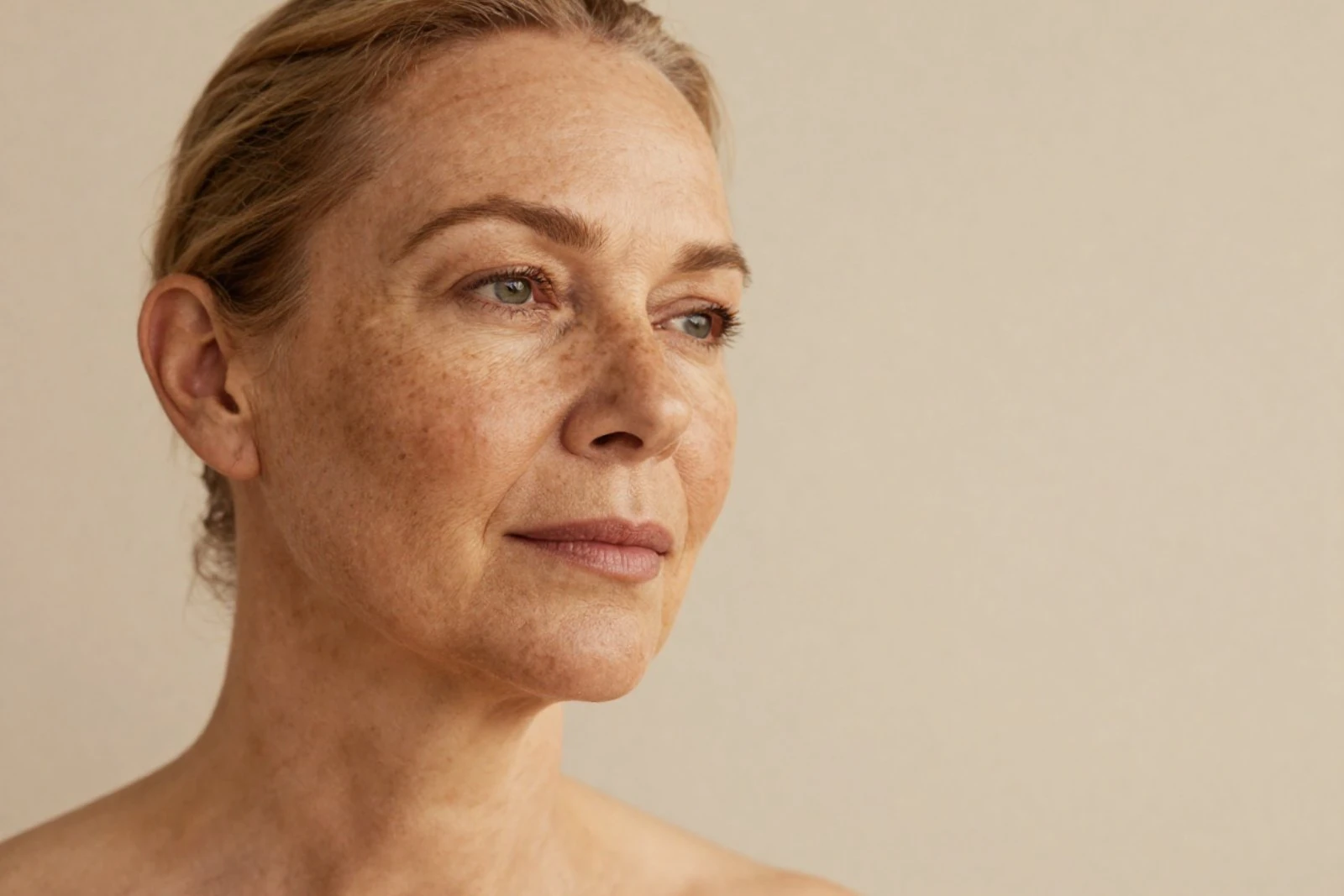
Pigmentation & Sun DamageNewstead, Brisbane
Body Dezign House is a doctor-led clinic in Newstead, Brisbane. Living in Brisbane means living with sun. Even a few minutes of daily exposure quietly drives the pigment changes most of us notice first in our thirties and forties: sun spots, uneven tone, melasma, and the dark patches that linger after a breakout. Every consultation here is guided by your anatomy, looks at your skin as a whole, and carries no obligation to proceed.
Pigmentation in Brisbane is a sun problem that shows up on the skin. Any treatment plan that does not address that first, however clever the technology, will fail. SPF 50+ applied every morning before you leave the house is doing more work for your skin than any laser in the clinic.Dr Fatemeh Asadi, MD, FRACGP
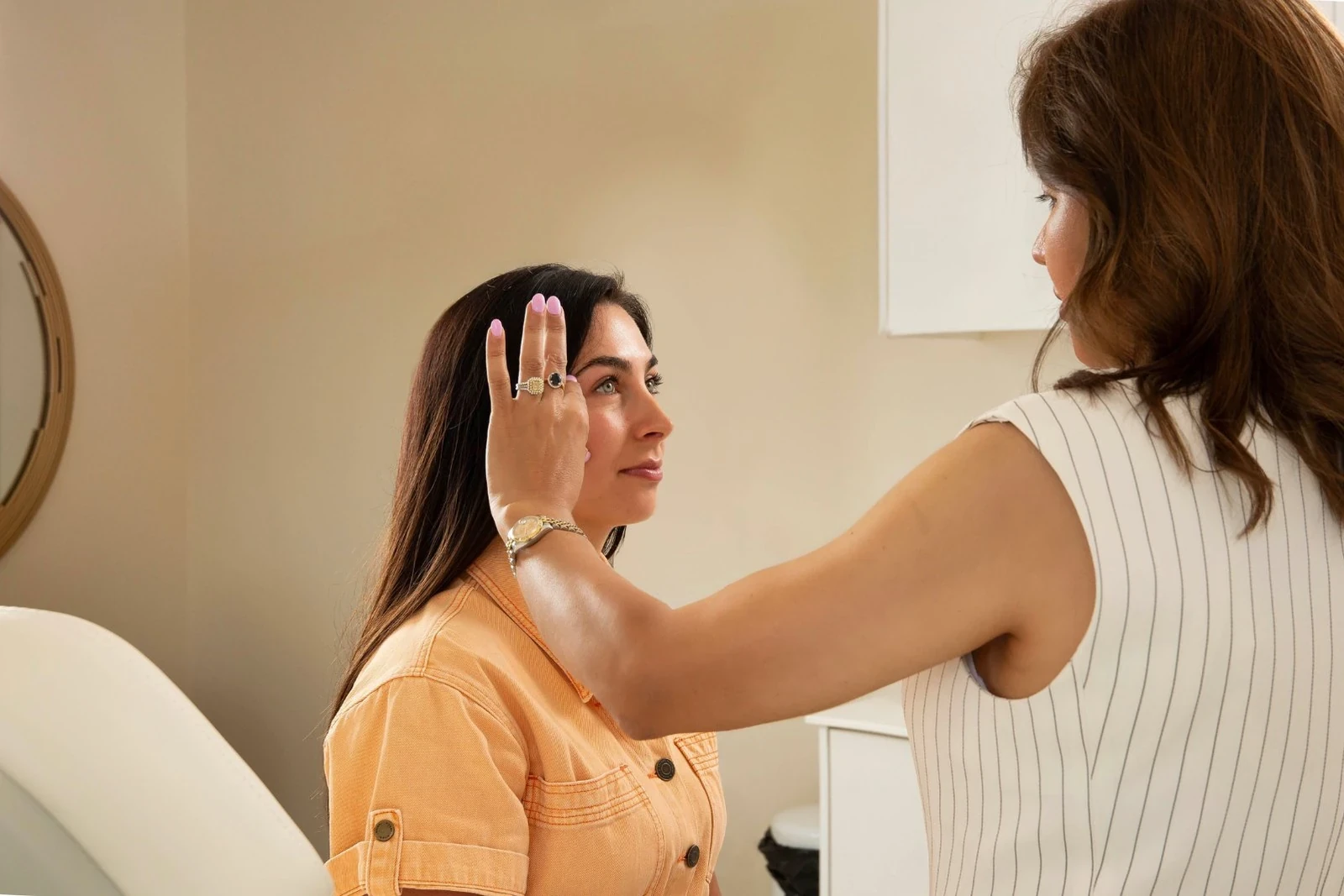
Dr Fatemeh Asadi, MD, FRACGP brings two decades in cosmetic medicine and general practice to every consultation. She is a Key Opinion Leader for Merz Aesthetics and an Official Trainer for Aptos Threads. This reflects her ongoing role in cosmetic medicine education, including attending national and international conferences, training other doctors and nurses, and contributing her clinical knowledge to the wider medical aesthetics community.
Our approach is careful and honest. We look at what is really driving your pigmentation. It might be years of sun, a hormonal trigger, inflammation left behind after another skin concern, or a mix of these. We also look at whether any treatment is genuinely right for you.
Types of Pigmentation
Commonly Assessed
Pigmentation is not one single thing. Different patterns have different causes, sit at different depths in the skin, and respond to different approaches. Working out the type is the first step. It tells us which options may help, and which could make things worse.
Sun Spots
& Solar Lentigines
These are the flat brown or tan patches on the face, hands, chest and shoulders. They build up over years of Queensland sun. Sun spots (solar lentigines is the medical name) sit near the surface of the skin and are usually the most satisfying type to treat. They often respond well to light-based devices and resurfacing, once good sun protection is in place.
Melasma
& Hormonal
Even, matching dark patches across the cheeks, forehead and upper lip, often set off by pregnancy, the pill, or perimenopause. Melasma sits deeper in the skin and can be unpredictable. It needs a careful, gradual approach, because treating it too hard can make it worse.
Post-Inflammatory
Hyperpigmentation
The dark marks left behind after acne, ingrown hairs or other damage to the skin. They linger in olive and darker skin tones, and are best treated only once the original inflammation has fully settled.
Freckles
& Ephelides
The lighter, smaller spots many of us have had since childhood. They are genetic, darken in the sun, and fade a little in winter. Part of the assessment is simply asking whether you want them treated at all, or whether good sun protection on its own is the right answer.
Age Spots
& Mature Pigmentation
Larger, darker patches that show up in the forties, fifties and beyond, especially on areas with decades of sun: the cheekbones, temples, backs of the hands, chest and shoulders. People often call them age spots or liver spots. They are really just years of sun damage finally surfacing. The assessment looks at how deep they are, where they sit, and the quality of the skin around them, because age spots rarely turn up on their own.
Uneven
Skin Tone
A general dullness or blotchiness, an uneven look without clear, separate spots. It is often the first sign of building sun damage, and one of the most satisfying things to treat.
Light from the side shows up the unevenness on a cheek more than light from straight on. What looks like one shade of unevenness is usually several things layered together: pigment at the surface from years of sun, deeper pigment from hormonal change, and pigment left behind by old inflammation. A good consultation reads each one separately, and is honest about which can be safely lifted and which is better left alone.Dr Fatemeh Asadi MD, FRACGP · GP & Cosmetic Physician
Your Consultation
in Brisbane
Your consultation at our Brisbane clinic starts with a conversation about your concerns and what you would like to achieve. We review your medical history, carefully assess your skin and the pattern of your pigmentation, and use VISIA skin analysis where appropriate to gain a better understanding of your skin's condition. We then explain our findings, discuss the treatment options that may be suitable for you, and answer your questions so you have a clear understanding of the benefits, possible risks, and alternatives before deciding whether to proceed. Risks & Complications →
Listening
Assessment
Options
Treatments We
May Discuss
The treatments listed here are examples of what may be considered. They are not a treatment plan and do not mean you will need all of them. Pigmentation rarely clears with a single treatment on its own, so your recommendation may pair an in-clinic device or peel with a daily skincare routine and steady sun protection, after your skin has been properly assessed at our Brisbane clinic.
CoolView Laser
A 532nm laser that works on both pigment and redness in the one device. Light at this wavelength is taken up by melanin (the pigment in sun spots, age spots and freckles) and by haemoglobin (what gives you redness and broken capillaries). That lets spots of unwanted pigment be targeted precisely, while built-in cooling protects the skin around them. It is often considered for individual sun spots, age spots, solar lentigines, and the small red marks that often come with years of sun. A consultation is needed to check whether it suits your skin type.
Lumecca IPL
An intense pulsed light (IPL) device that works on surface pigment and redness across a wider area than a targeted laser. Lumecca gives off a broad range of light that is taken up by both melanin (the pigment in sun spots and freckles) and haemoglobin (what causes redness and broken capillaries). That makes it well suited to the patchy, uneven tone, sun damage and broken vessels we see so often on Brisbane skin. It is usually discussed as a course of treatments rather than a single session.
Clear & Brilliant
A gentle fractional laser that treats the skin in tiny columns while leaving the skin in between untouched, which encourages the upper layers to renew over time. It is often discussed for early pigmentation, dullness and uneven tone, and to lift overall skin quality alongside more targeted pigment work. The downtime is minimal, which is part of why it fits well into busy lives across Newstead and the Brisbane inner north.
CO2 Laser Resurfacing
A resurfacing laser that may suit sun damage, uneven tone, enlarged pores and surface pigmentation where it is clinically appropriate. It removes the outer layers of the skin in a controlled way, which prompts new collagen and a smoother, more even surface. Whether it suits you depends on your skin type, the type of pigmentation, how much downtime you can take, and a medical assessment. Suitability is decided at consultation.
CoolPeel CO2 Laser
CoolPeel is a lighter resurfacing option with less social downtime, which may suit you if recovery time is a concern. It works on surface pigmentation, uneven tone and sun damage at a gentler depth than full CO2 resurfacing. Whether it suits you is assessed at consultation.
PRX-Plus
A topical skin booster from WiQo in Italy, made specifically for pigmentation and uneven skin tone. PRX-Plus combines a stabilised form of TCA, which works in the deeper layers of the skin, with homocysteic acid (HoA). HoA is unique to PRX-Plus and helps even out tone and reduce excess melanin. Citric and phytic acid are added for an antioxidant and brightening effect. Unlike a usual chemical peel, it does not cause visible peeling, so it suits people who cannot take social downtime. It is often discussed for surface pigmentation, the marks left after inflammation, and overall skin quality.
Skin Peels
A graduated range of medical-grade chemical peels at varying strengths, selected to match the depth and type of your pigmentation and the resilience of your skin. Peels work by removing pigmented surface cells in a controlled way, allowing fresher, more even-toned skin to surface beneath. Peel choice is highly individual; the same peel that lifts surface sun spots in one patient may aggravate melasma in another. The selection happens at consultation.
Skin Needling with Special Serum
Medical-grade microneedling paired with carefully chosen special serums during and just after the treatment. The tiny channels let brightening, antioxidant and pigment-balancing ingredients reach deeper into the skin than they could on their own. It may help with the dark marks left after inflammation, uneven tone, and mixed concerns where overall skin quality and pigmentation are treated in the same session.
ALASTIN A-LUMINATE Brightening Serum®
A brightening serum we stock at the clinic, formulated to help even the look of skin tone. Whether it fits your plan is decided at your consultation.
Dermaceutic Light Ceutic Unifying Night Cream
A unifying night cream we stock, often discussed to help even the look of skin tone.
Dermaceutic Mela Cream Pigmentation Cream
A targeted night cream we stock, discussed at consultation as part of a supervised plan to help even the look of skin tone.
ZO Skin Health Retinol Skin Brightener 1%
A 1% retinol brightener we stock, dispensed after a skin consultation, discussed to help even the look of skin tone.
All cosmetic procedures carry some risk and possible side effects. Whether a treatment suits you, what might rule it out, and the full range of possible complications are all discussed at your consultation. Individual results vary, and no outcome can be guaranteed. Read about Risks & Complications →
A few questions
before a consultation?
If you would rather talk to our team before booking, we are happy to take a thoughtful phone call. No pressure, no obligation. Just a conversation.
Frequently
Asked
Pigmentation can often be made a lot less visible with the right treatment. But living in Brisbane means living with constant sun, so true permanence is not realistic. Without daily SPF 50+ and good skin habits, the pigment cells switch back on and the dark spots return. The improvement tends to last longer when treatment goes hand in hand with steady sun protection. Individual results vary.
The main cause in Australia is years of sun. UV stimulates the melanocytes (the pigment cells in your skin) to make too much melanin. Other things add to it: hormonal change (pregnancy, the contraceptive pill, perimenopause), inflammation after acne or an injury to the skin, some medicines that make the skin more sensitive to the sun, and genetics. In Brisbane the UV index sits at 3 or higher for most of the year, so even short spells outside add up over time.
Yes. Cloud is not the protection people think it is. An overcast or partly cloudy day can give you as much UV as a clear one, sometimes more. UVA, the part of sunlight most responsible for pigmentation and skin ageing, comes through glass and is around all through daylight hours, every day of the year. In Brisbane and across Queensland, Cancer Council Australia treats a broad-spectrum SPF 50+ every morning as standard skincare, topped up every two hours when you are outside. This is true all year, including winter and cloudy days.
Most pigmentation needs a series of treatments rather than one session. Surface pigment often responds within 2 to 4 sessions, while deeper or hormonal pigment may need 4 to 8 sessions along with good skincare. The exact plan depends on the type and depth of your pigmentation, and is decided at your consultation. Individual results vary.
It varies from person to person and between different treatments. Most people describe pigmentation laser as a quick, warm flick on the skin, a bit like a rubber band. We talk through comfort measures, such as cooling and a numbing cream, before we start. If you tend to feel anxious about clinical procedures, or you do not cope well with pain, let us know at your consultation so we can plan around it.
It depends on the type and depth of your pigmentation, your skin type, your medical history, and how much sun you are getting. Some pigmentation, such as melasma, needs careful choice of treatment, because strong lasers can make it worse. If you are pregnant, breastfeeding, or recently sun-exposed, you may need to wait. Whether a treatment is right for you depends on your own situation, and is decided at a consultation, not online.
All cosmetic procedures carry some risk, including bruising, swelling, unevenness, infection, problems with blood vessels, and a result you are not happy with. The specific risks depend on the treatment, and we explain them in full at your consultation and again on the day. You can read more on our Risks & Complications page.

Dr Fatemeh Asadi MD, FRACGP
GP & Cosmetic Physician · Founder, Body Dezign House
Ready for a
Consultation or Treatment?
Book a time with Dr Asadi or her team at our Newstead clinic in Brisbane. New here? Begin with a consultation. Already consulted, or following a treatment plan you've discussed? Book your next session, or reach out with any other enquiry.