
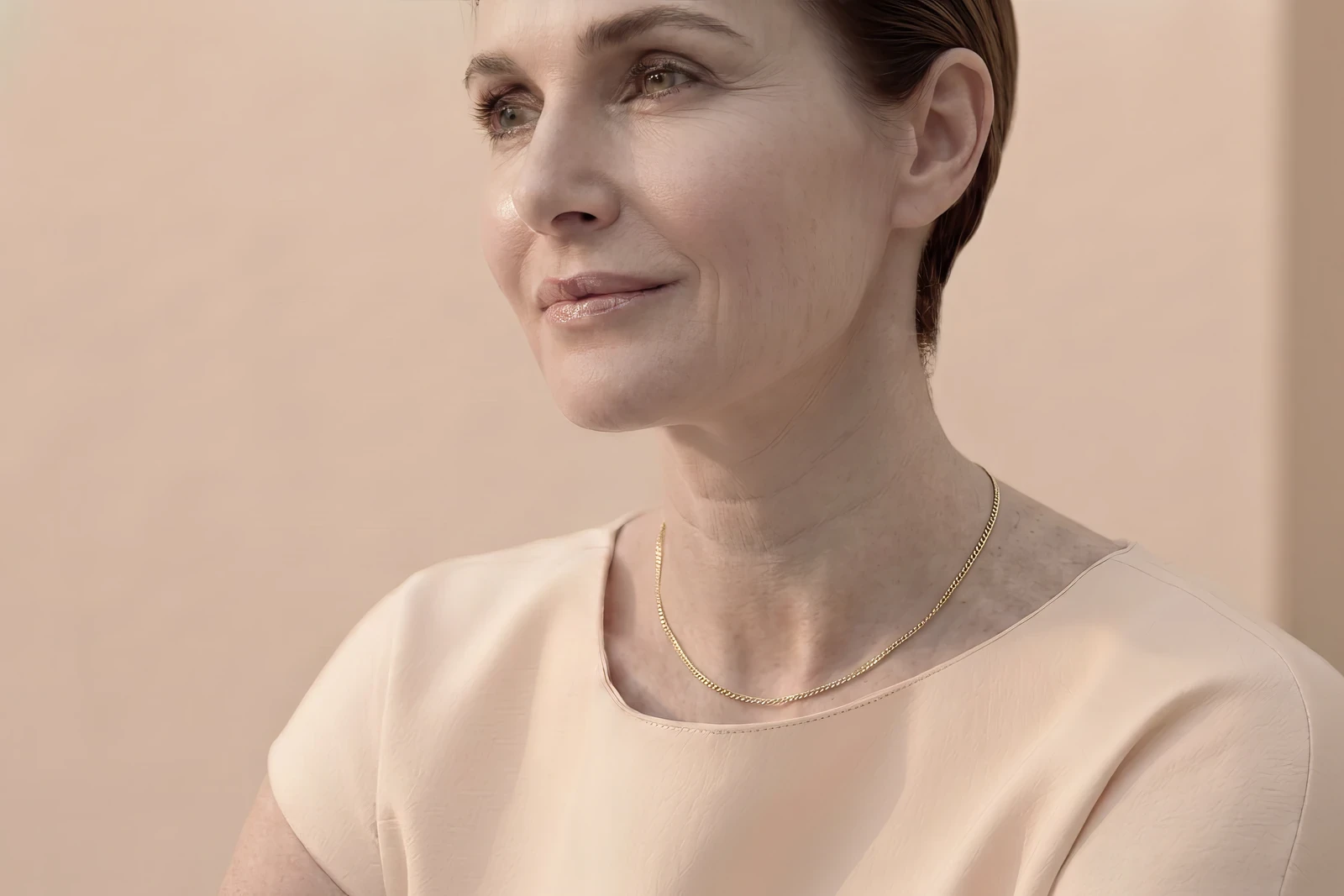
Neck Lines & Necklace LinesNewstead, Brisbane
Body Dezign House is a doctor-led clinic in Newstead, Brisbane. The neck sits where the face meets the chest, and its skin is thinner than both, which is often why it is the first place to start showing your age. Every consultation here is guided by your anatomy: we look at the horizontal lines and the muscle bands beneath them as two separate stories, and there is no obligation to go ahead.
The neck is one of the easier areas to read and one of the harder to treat well. Thin skin, a muscle that is always moving, the daily strain of looking down, and a close link to the face above all sit in one small area. An honest reading separates the horizontal lines from the vertical bands and from the looser skin around them, because each behaves differently, and each calls for a different conversation.Dr Fatemeh Asadi, MD, FRACGP
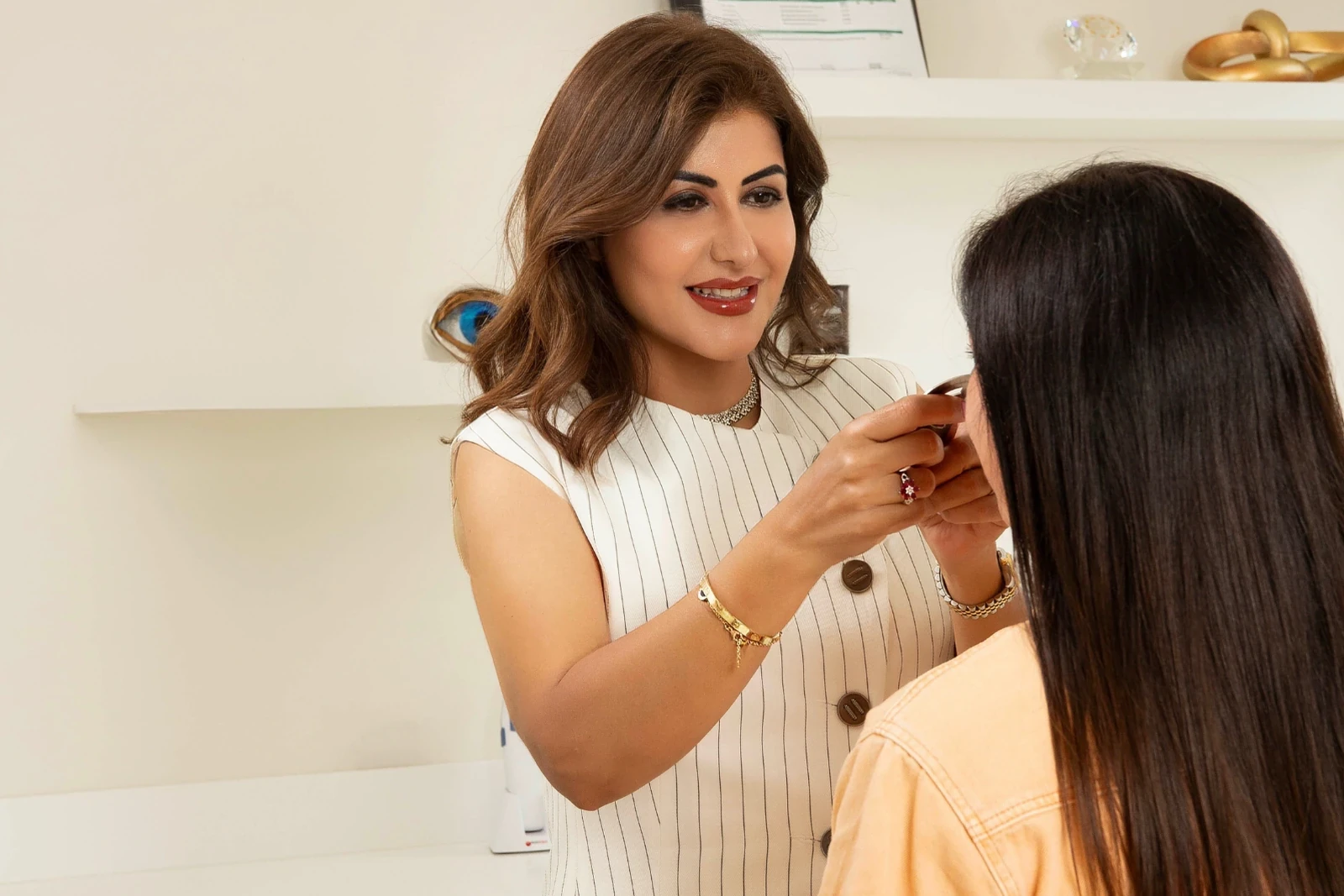
Dr Fatemeh Asadi, MD, FRACGP brings two decades in cosmetic medicine and general practice to every consultation. She is a Key Opinion Leader for Merz Aesthetics and an Official Trainer for Aptos Threads. This reflects her ongoing role in cosmetic medicine education, including attending national and international conferences, training other doctors and nurses, and contributing her clinical knowledge to the wider medical aesthetics community.
Her approach to neck lines is led by anatomy and never rushed. She separates the horizontal lines from the vertical bands and the broader skin condition, and looks at each on its own before any treatment is discussed. Where the picture is beyond what in-clinic treatment can meaningfully change, the honest answer is a referral for a surgical opinion, and she will say so plainly.
Areas Commonly
Assessed
Neck lines can come from several parts of the neck: the horizontal creases across the front, the vertical bands down the sides, looser skin overall, and how the lower face above is adding to it. Most people have more than one of these at once.
Horizontal
Necklace Lines
Horizontal lines across the front of the neck, sometimes called necklace lines, Venus rings, or tech neck lines. They form when bending the neck folds the same skin in the same spot, over and over, and as the skin slowly thins. We look at how deep they are, how many there are, and how set they look when your head is still.
Vertical
Platysmal Bands
The cord-like lines either side of the front of the neck. They show up as the platysma, the flat muscle just under the skin, becomes more visible when the skin and fat over it thin. We check them both when the neck is relaxed and when it moves, and look at each side on its own.
Cervicomental
Angle
The angle where the underside of the jaw meets the front of the neck. A clean angle here is a big part of how the lower face looks from the side, and it softens as the neck and jawline change.
Neck Skin
Quality
The skin on the neck is naturally thinner than the face and has fewer oil glands, so it shows thinning, sun damage, and rougher texture sooner. We look at the condition of the skin itself as much as the lines on it.
Tech Neck &
Lifestyle Contribution
Long hours looking down at a screen, sun on an area most of us forget to protect, the way you sleep, and smoking all affect how quickly neck lines form and how deep they get. We look at your daily habits too, because looking after the skin and treating it work together, not against each other.
Lower Face
Continuity
Neck lines rarely sit on their own. The jawline above and the decolletage below have the same kind of skin and change together. We look at the whole area as one, not as separate zones.
A necklace that once sat flat now catches on a faint ring beneath it. What looks like one line is usually three things at once: the skin thinning, the muscle folding the same crease every day, and years of sun the neck never shrugged off as well as the face above. A good consultation looks at each one on its own, and is honest about what can be helped and what needs a surgeon.Dr Fatemeh Asadi MD, FRACGP · GP & Cosmetic Physician
Your Consultation
in Brisbane
Your consultation at our Brisbane clinic starts with a conversation about your concerns and what you would like to achieve. We review your medical history, carefully assess the neck, and use VISIA skin analysis where appropriate to gain a better understanding of your skin's condition. We then explain our findings, discuss the treatment options that may be suitable for you, and answer your questions so you have a clear understanding of the benefits, possible risks, and alternatives before deciding whether to proceed. Risks & Complications →
Listening
Assessment
Options
Treatments We
May Discuss
The treatments listed here are examples of what may be considered. They are not a treatment plan and do not mean you will need all of them. Your recommendation may include one option, a combination, or a different approach altogether after your skin has been properly assessed at our Brisbane clinic.
Muscle Balancing
Some of the cord-like definition down the front of the neck comes from how actively the underlying muscle pulls. There are treatments that gently rebalance this activity, easing how much it draws into a vertical band while leaving its normal role in everyday head and neck movement intact. Whether this suits you, and which approach, placement, and amount fit your anatomy, is decided only at a full consultation.
Necklace Line Support
Volume support placed at a carefully chosen depth within the horizontal necklace lines to soften the creases and rebuild some support in the skin beneath. The neck skin is thin and the structures around it are delicate, so placement is gentle and careful. Whether this suits you, and which treatment, areas, and timing fit your anatomy, is decided only at a full consultation.
Skin Quality Treatment
There are treatments that prompt the deeper layers of the skin to build more collagen of its own, gradually and over a series of sessions, adding substance back to skin that has lost it. Often considered for general thinning and looseness across the neck rather than for a single line. Whether this suits you, and which approach, order, and timing fit your skin, is decided only at a full consultation.
Morpheus 8
Uses radiofrequency energy, delivered through very fine channels in the skin, to warm the deeper layers in a controlled way. This encourages the skin to build new collagen and improves its quality on the neck. Considered where mild looseness, texture, and shallow horizontal lines are part of the picture rather than the main issue.
Ultherapy
Focused ultrasound that sends energy into the deeper support layers of the skin along the lower face and upper neck. May be relevant where mild to moderate loose skin is adding to the neck lines, especially where the skin underneath still has reasonable spring to it. A dedicated consultation is required.
Aptos Thread Lifts
Fine threads placed along the lower face and upper neck to gently support tissue that has dropped and softened the angle under the jaw. May be discussed where this sagging is adding a fair amount to the picture. Dr Asadi is an Official Trainer for Aptos Threads.
Surgical Consultation
Where there is a lot of loose neck skin, deeply set lines, or a softened angle under the jaw beyond what in-clinic treatment can meaningfully change, a surgical opinion may be the better path. In these cases Dr Asadi will refer you to a specialist surgeon.
ZO Skin Health Neck Complex
A firming-feel neck cream we stock, often discussed for the look of the neck and jaw area.
All cosmetic procedures carry some risk and possible side effects. Whether a treatment suits you, what might rule it out, and the full range of possible complications are all discussed at your consultation. Individual results vary, and no outcome can be guaranteed. Read about Risks & Complications →
A few questions
before a consultation?
If you would rather talk to our team before booking, we are happy to take a thoughtful phone call. No pressure, no obligation. Just a conversation.
Frequently
Asked
Often, yes, depending on the kind of neck line. Some respond to skin-quality and volume support, some to treatments that balance muscle activity, and looser skin to tissue support where the structure underneath is still in reasonable shape. Where there is a lot of loose skin or very deeply set lines, a surgical referral is the better path. Whether something suits you is decided only at a full consultation. Individual results vary.
They are two different things in the same area. Horizontal necklace lines, sometimes called Venus rings or tech neck lines, are creases across the front of the neck. They form from bending the neck again and again (looking down, sleep positions, screen use) and from the skin slowly thinning. Vertical platysmal bands are the cord-like lines either side of the front of the neck. They show as the platysma muscle becomes more visible when the skin and fat over it thin. The two need different approaches, so we assess them separately.
Several things add up together. The neck skin is naturally thinner than the face and has fewer oil glands, so it changes earlier. The platysma muscle folds the skin above it every time the head moves, and over years that wears horizontal creases into the skin. Collagen and elastin fall away over time, sun speeds it up, and habits like long hours on a screen add strain. A neck assessment reads all of this together.
How long it lasts depends on the treatment. Your clinician will talk through what to expect at your consultation, based on the plan made for you. Individual results vary.
To a fair degree, yes. Daily sun protection on the neck, a good skincare routine, watching your screen and sleep posture, and looking after your skin in general all affect how quickly neck lines form. None of this stops lines forming altogether, but it changes how fast and how deep they get. When treatment is part of the plan too, prevention and treatment work together, not against each other. Individual results vary.
Mild to moderate horizontal necklace lines, visible vertical platysmal bands, mild loose neck skin, or a mix of these may all be suitable for assessment. More set-in loose skin or deeply etched lines may sit closer to a surgical conversation. Whether you are a good candidate depends on your anatomy, medical history, the medicines you take, and your goals, and is decided at a consultation.
All cosmetic procedures carry risks, including bruising, swelling, unevenness, infection, problems involving blood vessels, and a result you are not happy with. The neck needs extra care because the platysma muscle, blood vessels, and other important structures all sit in a thin layer of tissue. That is why neck treatments are done only by an experienced doctor, with a technique guided by your anatomy. The specific risks are explained in full at your consultation and again on the day. You can find full information on our Risks & Complications page. Individual results vary.

Dr Fatemeh Asadi MD, FRACGP
GP & Cosmetic Physician · Founder, Body Dezign House
Ready for a
Consultation or Treatment?
Book a time with Dr Asadi or her team at our Newstead clinic in Brisbane. New here? Begin with a consultation. Already consulted, or following a treatment plan you've discussed? Book your next session, or reach out with any other enquiry.